Cart
0
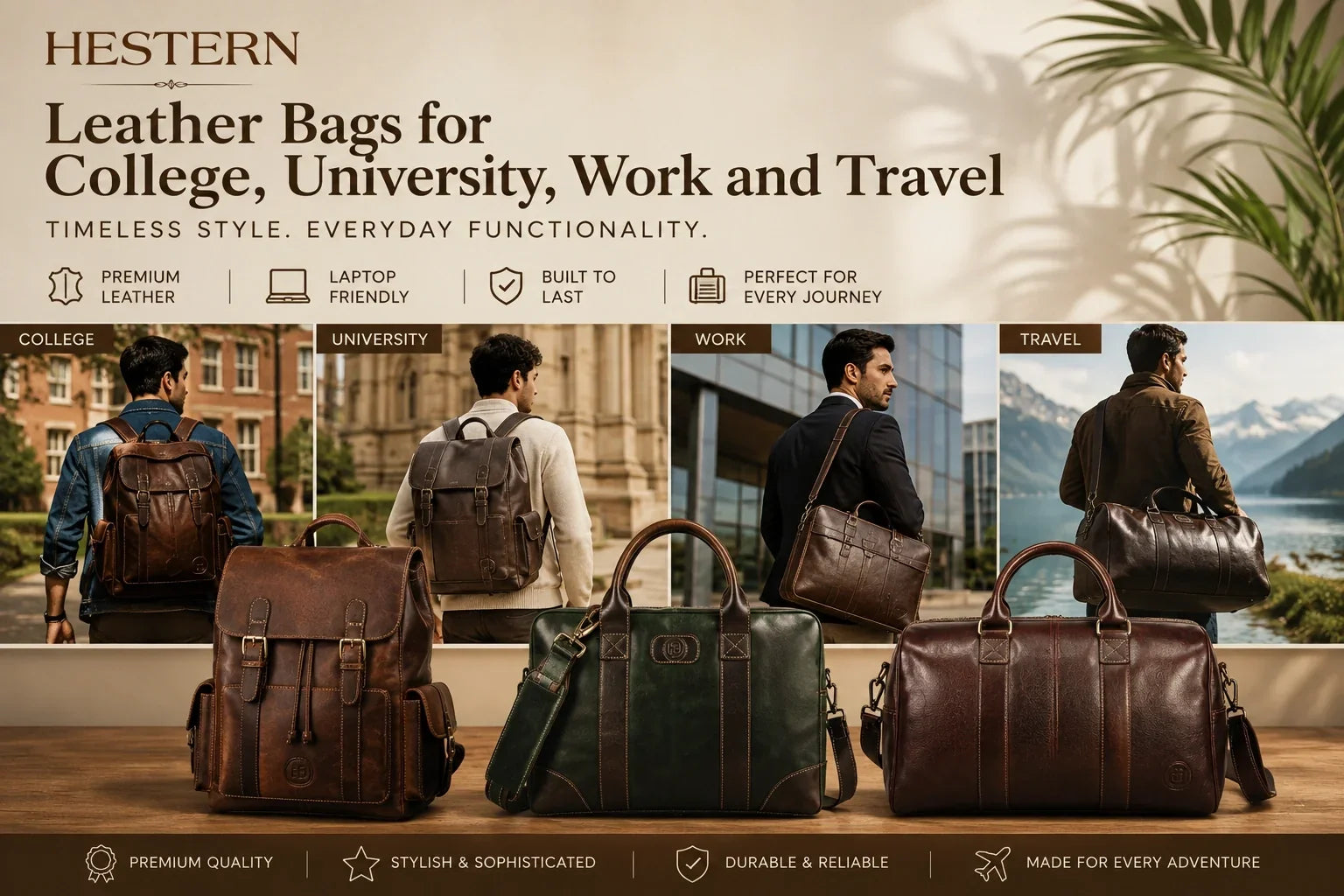
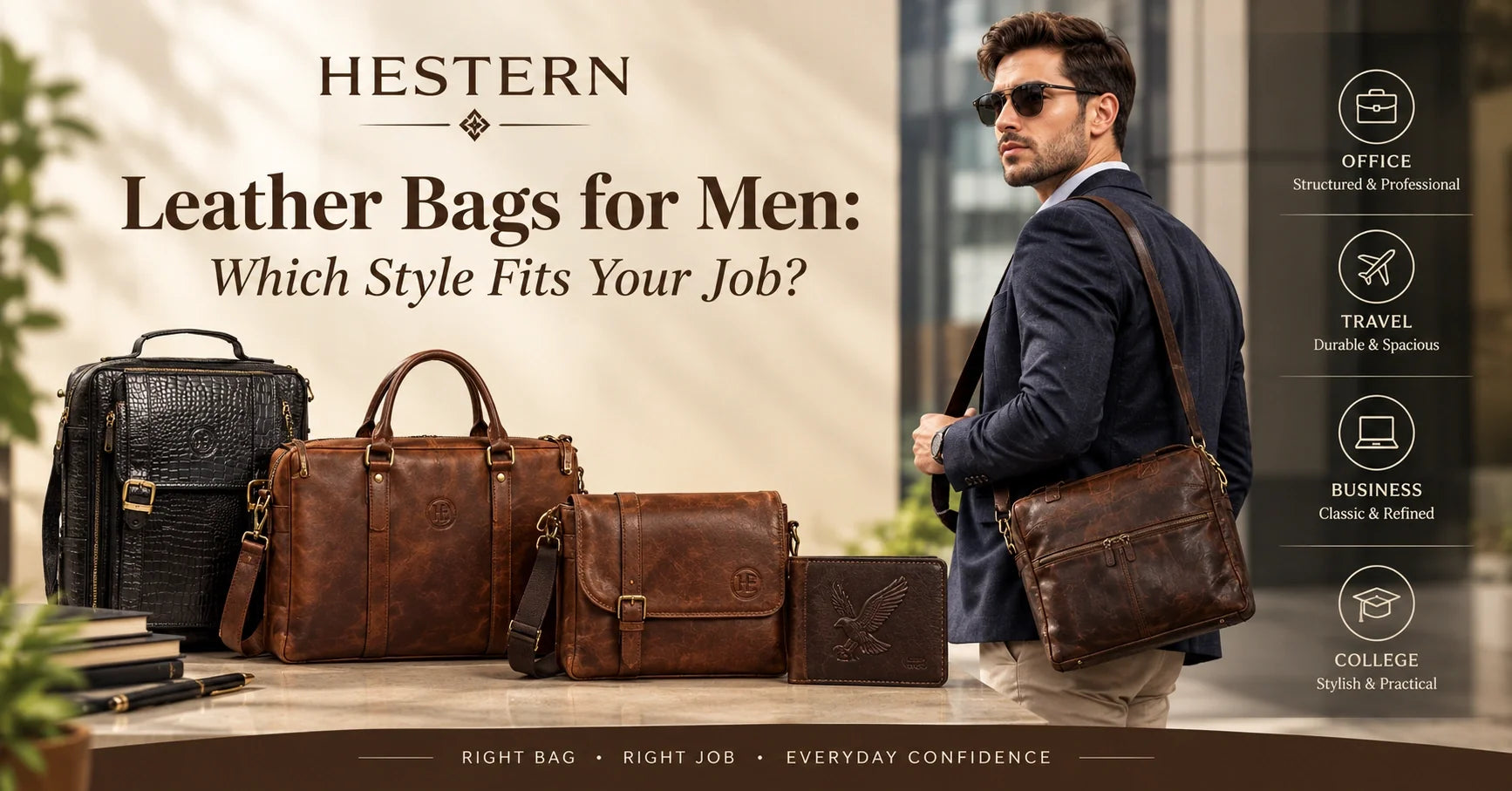
A first-year engineering student, a marketing manager heading into her third client meeting of the day, and a weekend traveller catching an early flight are not shopping for the same bag — even if they all walk into the same store asking for "a good leather bag." One needs room for a laptop, a thick notebook and a charging brick. Another needs something that looks sharp in a boardroom but doesn't dig into her shoulder on the metro. The third just needs two days of clothes and a phone charger that won't get lost in a black hole of a duffle.
That's really the starting point for choosing a leather bag: not "which one is nicest," but "what is this bag actually going to carry, and how often." A bag bought for the wrong purpose ends up half-used — too small for what you need on Mondays, too bulky for what you need on Fridays. This guide walks through how to match a leather bag to college, university, office work, business travel and weekend trips, and where Hestern's own leather backpacks, laptop bags and duffles fit into each of those situations.
Leather Bags for College and University
College bags and university bags aren't quite the same, even though people use the terms interchangeably. A first-year college student is usually carrying physical textbooks, a few notebooks, a water bottle and maybe a tiffin box. A university student — especially in a technical or postgraduate programme — is more likely carrying a laptop every single day, along with a charger, headphones, a couple of chargers' worth of cables, and maybe a tablet for notes.
This is where a leather student backpack earns its place. A good one needs:
-
A padded, separate laptop sleeve — not just a big open pouch where the laptop slides around loose
-
At least two to three compartments, so pens and cables don't end up mixed in with books
-
Comfortable, adjustable straps that don't cut in after a few hours of walking between classes
-
A structure sturdy enough to survive being dropped on a library floor or squeezed into a locker
-
Enough room for a day's essentials without being so bulky it's awkward on a crowded bus
A leather backpack tends to make more sense than a laptop bag or briefcase for this stage of life for one simple reason: hands-free carrying matters when you're moving fast between lectures, labs and the canteen, often with both hands full of something else. A structured leather laptop bag looks great in a meeting, but it's not built for a ten-minute sprint across campus. If you're choosing your first "proper" bag for college or university, a well-organised leather backpack like Hestern's Alpine Vintage Leather Laptop Backpack is a practical starting point — it's built with a padded compartment for a laptop alongside separate space for books and daily items, so it doesn't collapse into one messy pile at the bottom.
Leather Bags for Office and Work
Once you move from campus to office, the priorities shift. You're not sprinting between classes anymore — you're commuting, sitting through meetings, and probably carrying documents that need to stay uncreased. This is the search that usually reads as leather bags for office or leather bags for work, and the honest answer is: it depends on your role and your commute.
There are three broad categories worth knowing:
-
Laptop bags — structured, single-compartment-focused bags designed around protecting a laptop and holding a few documents. Good for people who don't carry much beyond their device.
-
Briefcases — more formal, often with a top handle and a strict, tailored shape. These suit people who attend a lot of external meetings and want a polished, no-nonsense look.
-
Professional backpacks — leather backpacks styled cleanly enough for office wear, useful for anyone commuting by two-wheeler, metro or a long walk where a shoulder bag becomes uncomfortable.
Here's the distinction that actually matters day to day: a bag can look sharp in a product photo and still be impractical for work. A briefcase with no dedicated laptop padding will scuff your laptop's corners within a month. A bag with a single main compartment means your charger, your ID card and your lunch are all fighting for space. Practical office bags separate laptop storage from document storage from small daily items — that's the difference between a bag that photographs well and one you'll actually reach for every morning. If you commute daily and want that separation built in, a laptop bag such as the Heritage Buffalo Pure Leather Laptop Bag keeps a padded laptop section apart from the rest of your daily carry, which is exactly what a five-day work week needs.
Executive Leather Laptop Bags for Professionals
For professionals who are regularly in client meetings, presenting to leadership, or travelling for work, the bag becomes part of the impression you make before you've said a word. This is where an executive leather laptop bag matters more than a standard office bag.
An executive bag needs to do several jobs at once: protect a laptop through airport security lines and taxi boots, hold printed documents flat without folding them, keep a charger and a power bank easily reachable, and still look composed after a long day of back-to-back meetings. Look for a dedicated padded laptop sleeve, a separate document section, small organiser pockets for a pen, cards and a phone, and hardware — zips, buckles, stitching — that's built to be opened and closed dozens of times a week without loosening.
Hestern's Executive Heritage Pure Leather Laptop Bag – Espresso Brown is built around this exact use case — a structured laptop bag with a formal, understated finish that works for a Monday client pitch and a Friday flight out for a review meeting without needing to switch bags in between. That kind of one-bag-for-everything reliability is really what "executive" should mean in practice, not just a premium price tag.
Stylish and Fashionable Leather Bags for Everyday Life
Not every bag needs to be justified purely by function — plenty of people are searching for stylish leather bags or fashionable leather bags simply because they want something that looks good carried daily, whether that's to work, to a weekend brunch, or on a casual outing. The trick is balancing that with the same practical checklist: does it fit what you actually carry, is it comfortable over a few hours, and does it hold its shape?
A well-made leather bag doesn't have to choose between looking good and working hard. A structured backpack in a rich tan or espresso tone reads as polished on a work day and casual enough for a weekend outing — no wardrobe change required. A sling or crossbody in supple leather covers the in-between days when you're carrying almost nothing but still want something that isn't a plastic tote. The goal with everyday style isn't to buy the flashiest option in the range; it's to buy the one that fits your actual size, shape and colour preferences and then holds up to being used, not just displayed. A leather backpack like the Ranger Vintage Leather Backpack is a good example of this middle ground — structured enough for daily use, styled enough that it doesn't look like it belongs only in an office.
Leather Bags for Travel
Travel bags are their own category, and the mistake most people make is buying one bag and expecting it to cover every trip length. It won't. Here's roughly how the options break down:
-
Backpack — best for day trips, city exploring, or as a personal item alongside checked luggage
-
Laptop backpack — for combined work-and-travel trips, where you need your laptop accessible at security and a change of clothes for one or two nights
-
Duffle bag — the sweet spot for weekend trips and short work travel, roomy enough for two to three days without being unwieldy
-
Crossbody or sling bag — for minimal carry, sightseeing, or as a secure personal item that keeps your passport and phone close
-
Larger travel luggage (suitcase) — for longer trips or checked baggage, where you need structured, wheeled capacity
This is also where the phrase leather travel suitcase comes up most in searches — and it's worth being precise about what that means in practice. A leather duffle or a leather travel backpack works well for short trips where you're carrying your own bag through security and into a cab. A hard-structured, wheeled suitcase is a different product built for longer journeys and checked luggage, and it's worth choosing based on your actual trip length rather than assuming one bag covers both. For a weekend away or a two-to-three day work trip, a well-built leather duffle is usually the more practical, more comfortable choice to carry yourself — save the wheeled suitcase for the trips where you genuinely need that extra capacity.
Which Leather Bag Should You Choose?
|
Need |
Recommended bag |
|
College |
Leather student backpack |
|
University |
Laptop backpack |
|
Office |
Leather laptop bag |
|
Business meetings |
Executive laptop bag/briefcase |
|
Daily commute |
Backpack or laptop bag |
|
Short trip |
Leather duffle |
|
Minimal carry |
Sling/crossbody |
|
Longer travel |
Suitcase + leather personal bag |
Full-Grain vs Top-Grain Leather
Once you've settled on the type of bag, the leather itself decides how it wears over time — and this is where the two most common grades come in.
Full-grain leather uses the outermost layer of the hide, including its natural markings and texture. It's the most durable option available, and rather than looking worn out over years of use, it develops a patina — a gradual darkening and softening that many people actually prefer to a brand-new look. It's the right choice if you want a bag that ages with you and can handle daily wear for years.
Top-grain leather is sanded and refined for a smoother, more uniform finish. It's slightly more resistant to stains and scuffs in the short term, with a cleaner, more consistent appearance — a practical choice for anyone who wants a polished look without the natural imperfections full-grain leather carries. Hestern's full-grain leather bags collection is built for buyers who want that rugged, ages-well character, while the top-grain leather bags range suits anyone who prioritises a smoother, more formal finish for office and daily use.
How to Choose the Right Size
Size is the detail most people get wrong, usually in one of two directions. Too small, and you're forcing a 15-inch laptop into a sleeve meant for 13 inches, or leaving your charger at home because there's no room. Too large, and you end up with a half-empty bag that looks slouchy and throws off your posture from the uneven weight distribution.
Before choosing a size, take stock of what you actually carry on a typical day — not an ideal day. Laptop size (13", 14", 15" and 16" all fit differently), the number of books or files, whether you carry a water bottle, gym clothes, or a change of shoes, and how many accessories — chargers, power banks, headphones — travel with you regularly. A student carrying two textbooks and a laptop needs a genuinely different capacity than a professional carrying just a laptop and a notebook. Matching the bag to your actual daily load, rather than to what looks impressive on a shelf, is what makes it comfortable to use every single day rather than something you dread picking up.
Why Hestern Leather Bags?
Hestern builds its bags around genuine, ethically sourced leather, with both full-grain and top-grain options depending on the finish and durability you're after. Every bag is handcrafted with attention to stitching, hardware and interior organisation — padded laptop compartments, dedicated pockets for accessories, and structured bases that hold their shape under daily use. The range spans laptop bags, backpacks, duffles, slings and wallets, which means the same underlying craftsmanship carries through whether you need something for a lecture hall, a boardroom, or a weekend flight. For a broader look at the full men's range, Hestern's leather bags for men collection brings these categories together in one place.
Frequently Asked Questions
1. What is the best leather bag for college students?
A leather backpack with a padded laptop compartment is generally the best fit for college and university students. It should have separate sections for books, chargers and stationery so items don't get jumbled together, along with comfortable, adjustable straps for walking between classes. Hands-free carrying matters more at this stage than a formal briefcase style, since students are often moving quickly between lectures, labs and campus facilities throughout the day.
2. Are leather bags suitable for office use?
Yes, leather bags are well suited to office use, provided they're chosen for function and not just appearance. A good office bag should have a padded laptop section separate from documents and daily items like chargers or ID cards. Structured laptop bags, briefcases and clean-styled professional backpacks all work, depending on your commute and how much you carry. The key is choosing organisation over looks alone, since a beautiful bag with poor compartments becomes inconvenient fast.
3. Which leather bag is best for work?
It depends on your role. A laptop bag suits people who mainly carry a device and a few documents. A briefcase suits those attending frequent external meetings and want a formal look. A professional leather backpack suits daily commuters who need hands-free comfort. For frequent client meetings or travel, an executive leather laptop bag with dedicated compartments for a laptop, documents and accessories tends to be the most versatile choice for full working weeks.
4. Can a leather bag be used for travel?
Yes, leather bags work well for short and weekend travel. A leather duffle bag or a leather travel backpack comfortably holds two to three days of clothing and essentials and is easier to carry through airports or into a cab than a wheeled case. For longer trips or checked luggage, a structured suitcase is more practical, with a leather bag serving as your personal carry item for a phone, passport and daily essentials alongside it.
5. What type of leather is best for everyday bags?
Full-grain leather is generally best for everyday bags that see daily wear, since it's the most durable option and develops an attractive patina over time rather than looking worn out. Top-grain leather is a strong alternative if you prefer a smoother, more uniform finish that resists surface marks a little better in the short term. Both age well with basic care, so the choice mostly comes down to whether you prefer a natural or polished look.