Cart
0
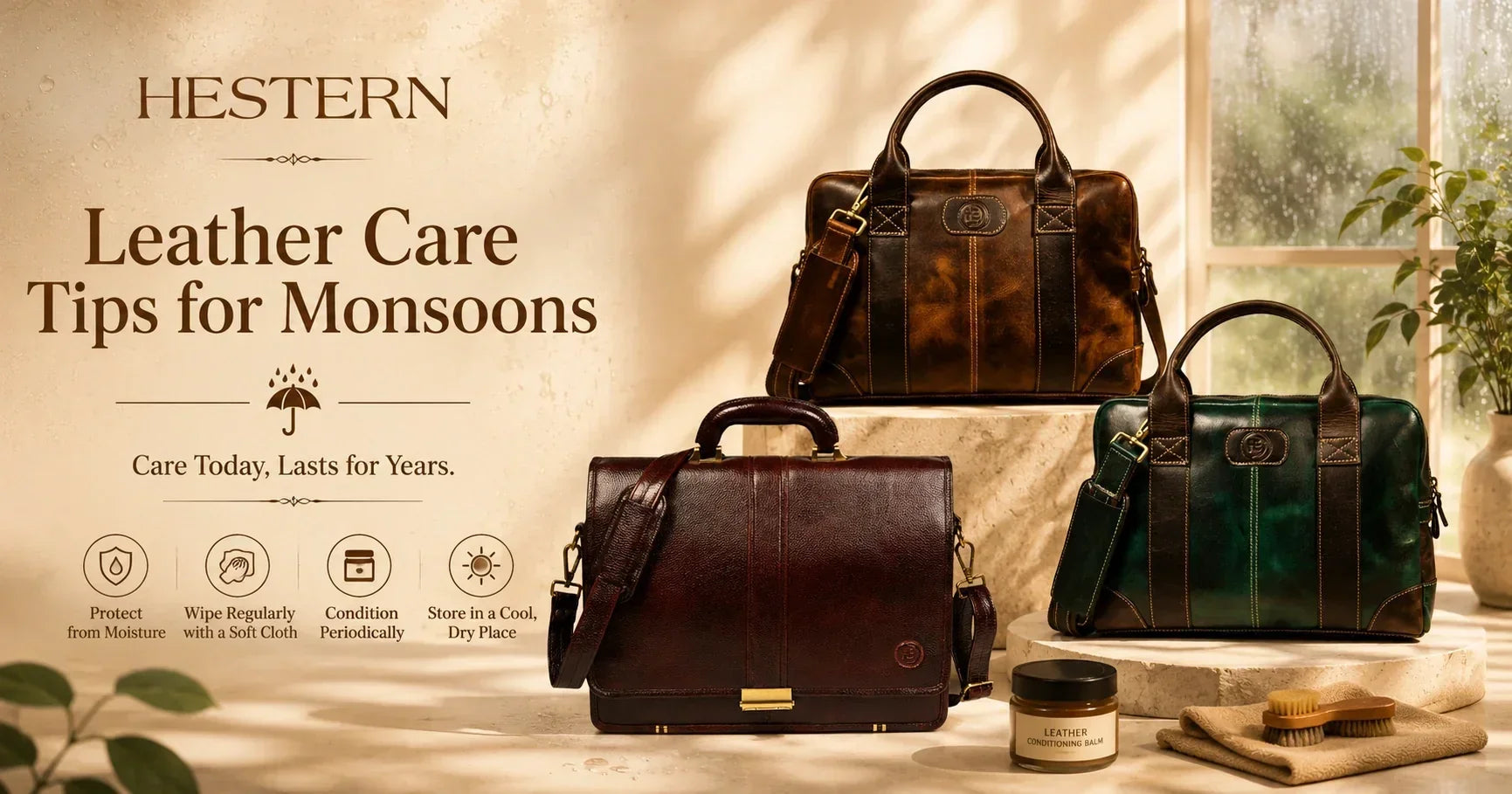
A sudden shower on the way to work. A few drops of rain on your leather office bag. Or perhaps you reach home after a wet commute and leave your backpack near the door, planning to deal with it later.
These situations are common during the Indian monsoon, but leather needs a little more attention during this season.
Leather is a natural material, and prolonged exposure to moisture, humidity and poor ventilation can affect its appearance and feel. A damp bag that is stored immediately inside a cupboard may develop an unpleasant smell or even early signs of fungus. On the other hand, trying to dry a wet leather bag quickly with intense heat can make the leather stiff and may contribute to cracking or colour changes.
The good news is that proper leather bag care during the monsoon does not have to be complicated.
A few simple habits—wiping moisture quickly, allowing the bag to dry naturally, keeping it ventilated, cleaning it gently and conditioning it when needed—can make a significant difference.
Whether you carry a leather laptop bag to the office, a backpack to college or a leather duffle bag for weekend travel, this guide explains how to protect your leather bag throughout the rainy season.
Why Monsoon Can Damage Leather Bags
Indian monsoon weather creates several conditions that can be difficult for leather bags.
Humidity keeps moisture in the surrounding air, while sudden rain can leave the surface of a bag wet. If the bag remains damp for several hours, moisture can penetrate areas such as seams, handles and folds.
The main problems associated with leather bags in rainy season include:
- Excess moisture
- Humidity
- Water stains
- Unpleasant odour
- Fungus and mould
- Stiffness after improper drying
- Loss of natural oils
- Surface cracking
- Changes in colour or finish
There is an important difference between briefly getting caught in the rain and leaving a leather bag damp for hours.
A few drops or temporary exposure does not automatically mean your bag is ruined. The bigger problem is prolonged dampness combined with poor drying and storage.
That is why knowing how to protect leather bags from rain is less about avoiding every drop of water and more about responding correctly when moisture does reach the leather.
What to Do If Your Leather Bag Gets Wet in the Rain
If your bag gets caught in a sudden monsoon shower, don't panic. Avoid trying to fix everything immediately with heat or excessive cleaning.
Follow these steps.
1. Move the Bag Away From the Rain
Get the bag somewhere sheltered as soon as practical. The longer leather remains exposed to rain, the more moisture it may absorb.
2. Empty the Bag
Remove your laptop, documents, clothing and other belongings. This also allows air to reach the inside of the bag.
If the lining is damp, leave the compartments open while the bag dries.
3. Wipe Away Surface Moisture
Use a soft, clean cloth to gently remove visible water from the surface.
Do not rub aggressively. The goal of leather bag cleaning at this stage is simply to remove excess moisture.
4. Let It Air Dry Naturally
Place the bag in a well-ventilated indoor area and allow it to dry naturally.
Keep pockets and compartments open so air can circulate.
5. Keep It Away From Direct Heat
Do not put a wet leather bag directly under intense sunlight, beside a room heater or in front of a high-heat appliance.
6. Avoid a Hair Dryer
A hair dryer may seem like a convenient solution, but concentrated heat can dry leather too quickly.
7. Condition or Polish Only When Appropriate
Once the bag is completely dry, assess its condition. If the leather feels unusually dry, an appropriate leather conditioner may help maintain its feel.
This is where a suitable leather conditioning balm can be useful, provided it is compatible with the specific leather finish.
The key principle is simple: remove moisture gently, dry naturally and only then think about conditioning or polishing.
Never Dry a Wet Leather Bag This Way
One of the most common leather-care mistakes during monsoon is trying to speed up drying.
Avoid:
- Direct, intense sunlight
- Hair dryers
- Room heaters
- Radiators
- High-temperature appliances
- Irons
- Placing the bag directly against a heat source
Leather contains natural oils and moisture within its structure. Excessive heat can cause the material to dry too quickly.
Depending on the leather and finish, this may contribute to:
- Stiffness
- Shrinkage
- Surface cracking
- Colour changes
- Loss of natural oils
Natural air drying may feel slow, particularly when humidity is high, but it is generally a gentler approach.
If the bag is significantly soaked or has developed serious damage, professional leather-care assistance may be more appropriate than experimenting with household methods.
How to Clean a Leather Bag During Monsoon
Regular leather bag cleaning becomes particularly useful during the rainy season because bags can collect dust, road moisture and everyday dirt during wet commutes.
Start by removing loose dust with a soft, dry cloth.
For minor surface marks, gently spot-clean the affected area using a method and product appropriate for the leather. Avoid soaking the bag.
A simple cleaning routine is:
- Remove dust and loose dirt.
- Wipe the surface gently with a soft cloth.
- Spot-clean marks carefully.
- Avoid excessive water.
- Use a leather-specific care product when required.
- Allow the bag to dry naturally.
- Condition or polish only when appropriate for the leather.
Different leather finishes can react differently to cleaning products. A product suitable for one type of leather may not be suitable for another.
For this reason, avoid aggressive household cleaners, detergents or untested DIY solutions.
If you are unsure about a product, testing it on a small, less visible area first is a sensible precaution.
How to Prevent Fungus and Mold on Leather Bags
Fungus is one of the biggest concerns when learning how to protect leather bags from moisture during an Indian monsoon.
Fungus can become a problem when moisture, humidity and poor ventilation come together.
A common scenario looks like this: you return home with a slightly damp bag, place it inside a wardrobe and forget about it for several days. Because the wardrobe has limited airflow, the remaining moisture has nowhere to go.
That is why prevention is much easier than dealing with a serious fungus problem later.
Practical ways to prevent fungus:
- Never store a damp leather bag.
- Allow the bag to dry completely before storage.
- Keep storage areas reasonably dry and ventilated.
- Use a breathable dust bag.
- Avoid long-term storage inside sealed plastic bags.
- Keep the bag away from damp floors and walls.
- Do not overcrowd the wardrobe.
- Check stored bags periodically during long periods of humid weather.
If you notice early signs of fungus, avoid experimenting with harsh household chemicals. Aggressive substances may damage the leather finish even while appearing to remove the visible problem.
For significant mould or fungus growth, professional cleaning may be safer.
How to Store Leather Bags During Monsoon
Good storage is an often-overlooked part of leather bag maintenance.
Even if you do not use a particular bag every day, monsoon humidity continues to affect the environment around it.
Before storing a leather bag:
- Make sure it is completely dry.
- Empty all compartments.
- Keep pockets open while drying.
- Use a breathable dust bag.
- Avoid sealed plastic for long-term storage.
- Keep the bag off damp floors.
- Avoid tightly packed cupboards.
- Maintain reasonable airflow.
- Check stored bags periodically.
You can also gently stuff the interior with clean, dry paper or another suitable material to help the bag retain its shape.
Avoid overstuffing. The purpose is simply to support the structure while the bag is stored.
Handles and straps should also be positioned naturally rather than sharply folded or compressed for long periods.
How Often Should You Condition or Polish a Leather Bag?
There is no universal rule that says every leather bag needs conditioning on a fixed weekly or monthly schedule.
The appropriate frequency depends on several factors:
- Leather type
- Frequency of use
- Exposure to rain
- Environmental humidity
- How dry the leather feels
- Existing finish
- General condition of the bag
It is also useful to understand the difference between cleaning, conditioning and polishing.
Cleaning removes surface dirt and marks.
Conditioning is intended to help maintain the leather's feel and flexibility when the leather-care product is suitable for that particular finish.
Polishing is generally focused more on maintaining or enhancing the appearance of suitable leather surfaces.
A leather conditioning balm may be appropriate when the leather needs conditioning, but always choose a product compatible with your leather type and follow its directions.
Likewise, a leather polish or shining kit should not be treated as a universal solution for every leather finish.
More product is not necessarily better. Applying excessive conditioner or polish can leave an unwanted residue or alter the appearance.
Use a Leather Care Kit for Regular Maintenance
Keeping the right leather-care products at home makes routine maintenance easier.
A dedicated leather care kit can be useful because it brings basic care essentials together instead of requiring you to improvise with household products.
For Hestern customers looking for a dedicated option, the Hestern Leather Care Kit includes leather-care essentials such as polish and a brush.
A leather care kit with polish and brush can be particularly convenient for routine maintenance, but the correct method still depends on the leather and its finish.
For people who specifically search for a shining kit, remember that maintaining the appearance of leather is not only about making the surface shiny. Regular gentle cleaning, appropriate conditioning and proper storage are equally important.
The goal should be healthy, well-maintained leather—not simply a highly polished surface.
Common Leather Bag Care Mistakes During Monsoon
Here are some mistakes worth avoiding.
1. Storing the Bag While Damp
Moisture trapped inside a cupboard can contribute to odour and fungus.
2. Using a Hair Dryer
Concentrated heat may dry the leather too quickly.
3. Leaving It in Direct Sunlight
Strong heat can affect leather's moisture balance and finish.
4. Using Too Much Water
Leather generally does not need to be soaked to clean a small mark.
5. Using Household Cleaners
Detergents and aggressive chemicals may not be suitable for leather.
6. Ignoring Early Fungus
Small signs of fungus should not simply be left untreated.
7. Keeping Leather Bags in Plastic Bags
Sealed plastic can restrict airflow and trap moisture.
8. Overloading a Wet Bag
A soaked bag should be allowed to dry properly before returning to normal use.
9. Skipping Regular Maintenance
Small maintenance habits can prevent minor problems from becoming bigger ones.
10. Using Unsuitable Polish or Conditioner
A product designed for another leather type may produce unwanted results.
Monsoon Leather Bag Care Checklist
Save this quick checklist for the rainy season:
- Wipe rainwater as soon as practical.
- Empty the bag if it becomes soaked.
- Air dry naturally.
- Keep the bag away from intense heat.
- Never store damp leather.
- Keep storage areas ventilated.
- Check regularly for fungus.
- Clean gently.
- Use a suitable conditioner when needed.
- Polish only when appropriate.
- Store the bag in a breathable dust bag.
- Keep it away from damp floors.
- Inspect bags that are not used regularly.
These small habits form the foundation of good leather bag care tips for the Indian monsoon.
Does Rainwater Ruin a Leather Bag?
Not necessarily.
Occasional exposure to rain does not automatically ruin a leather bag. The bigger concern is prolonged moisture, improper drying and poor storage.
If your bag gets wet, act promptly. Remove its contents, wipe away surface moisture, allow it to air dry naturally and avoid direct heat.
Once the bag is completely dry, inspect the leather and decide whether cleaning, conditioning or polishing is appropriate.
The exact response can depend on the leather type and finish, so avoid treating every leather bag in exactly the same way.
Final Thoughts: Simple Care Goes a Long Way
Monsoon does not mean you have to stop carrying your favourite leather bag.
It simply means your routine needs a little more attention.
The most useful approach to how to take care of leather bags during monsoon can be remembered in five steps:
Quick action + gentle cleaning + natural drying + proper storage + regular maintenance.
If rain catches you during your commute, don't try to dry the bag with intense heat. If the bag becomes damp, don't put it straight into the wardrobe. If the leather looks dry after the monsoon exposure, consider whether suitable conditioning is needed.
And if you own several leather bags, check the ones sitting unused in your wardrobe from time to time.
With consistent leather bag maintenance and the right products, your bags can remain a practical and stylish part of your everyday routine through India's humid and unpredictable rainy season.
Frequently Asked Questions
1. Can leather bags get wet in the rain?
Yes, a leather bag can occasionally get wet in the rain, but prolonged exposure to moisture should be avoided. If your bag gets caught in a shower, move it to a dry place and gently wipe away surface water with a soft cloth. Empty the bag and allow it to air dry naturally in a well-ventilated area. Do not use a hair dryer, heater or intense direct sunlight to speed up the process. Once the leather is completely dry, inspect it and use an appropriate leather-care product if required. The important thing is to respond properly rather than leaving wet leather unattended for hours.
2. How do I dry a wet leather bag during monsoon?
The safest general approach is to let the bag dry naturally at room temperature in a well-ventilated area. First, remove everything from the bag and gently wipe away visible water with a clean, soft cloth. Open the compartments so air can circulate through the interior. Avoid hair dryers, heaters, irons and intense sunlight because excessive heat can affect the leather. Do not apply conditioner or polish while the bag is still wet. Wait until the leather has dried completely, then assess its condition before deciding whether conditioning or polishing is appropriate.
3. How can I prevent fungus on my leather bag?
The best prevention is to control moisture and improve airflow. Never put a damp leather bag directly into a cupboard after returning from the rain. Allow it to dry completely first, then store it in a breathable dust bag. Avoid sealed plastic bags for long-term storage, particularly during humid weather. Keep the bag away from damp floors and avoid overcrowding wardrobes so air can circulate. Bags that are not used regularly should be inspected periodically during monsoon. If you notice significant fungus or mould, avoid harsh household chemicals and consider professional leather cleaning to reduce the risk of damaging the leather.
4. Can I use leather polish during monsoon?
Leather polish can be useful for suitable leather finishes, but it should not be treated as a solution for wet or dirty leather. If your bag has been exposed to rain, first remove surface moisture and let it dry completely. Clean it gently if necessary. Only then should you consider using a compatible polish. A leather conditioning balm may be more appropriate when the leather needs conditioning rather than simply a change in appearance. Always follow the product instructions and consider the specific leather finish. A shining kit can be convenient, but using the right product matters more than applying polish frequently.
5. How should I store leather bags during the rainy season?
Always make sure the bag is completely dry before storage. Empty all compartments and allow them to air out. Store the bag in a breathable dust bag rather than a sealed plastic bag. Keep it away from damp floors, walls and poorly ventilated corners. Avoid overcrowding the wardrobe because restricted airflow can contribute to moisture-related problems. You can lightly stuff the bag with clean, dry material to help it retain its shape, without overfilling it. During prolonged monsoon humidity, inspect stored bags occasionally for odour, dampness or early signs of fungus and address problems before they become more serious.