Cart
0
Nobody actually goes wallet shopping until the old one's basically dead. Most guys just grab whatever's around, use it for years without thinking twice, and only start paying attention again once the leather cracks at the fold or a card slot tears. 2026's a bit different though. Almost every card you carry taps now, your debit card, your office ID, even your metro card, and that's changed what people expect from a wallet. It's not really about looks anymore. It's about whether it can keep someone with a scanner from grabbing your card info while it's sitting in your pocket, without you even realizing. That's basically why RFID-blocking wallets have become such a big search trend in India this year. People aren't just after a wallet anymore, they want something that actually protects them too.
This guide gets into the classic argument, bifold vs trifold wallet, plus a few other things worth thinking about before you spend your money on the next one.
Why Leather Still Wins
Honestly, vegan leather has gotten decent, but it's still not the same thing. Real leather breaks in. Mine's got a few scratches near the card slot from keys rubbing against it in my bag, and instead of looking beat up, it just looks lived in, like a pair of jeans you've had forever. Cheap synthetic wallets tend to peel at the edges within a year, especially in India's heat and humidity. Full-grain and top-grain don't do that. My last one lasted almost six years before I finally switched it out, and even then the leather itself was fine, I just wanted a change.
A few practical things to check before you actually buy the best leather wallet for men:
- Full-grain or top-grain leather, it just lasts longer
- Stitched seams, not glued ones, since glue gives out first
- A compact size so it doesn't turn into a brick in your pocket
- An RFID-blocking lining if you tap to pay often
Now for the part most people actually get stuck on: bifold or trifold?
Bifold vs Trifold Wallet: Which One Fits You Better
Bifold Wallets

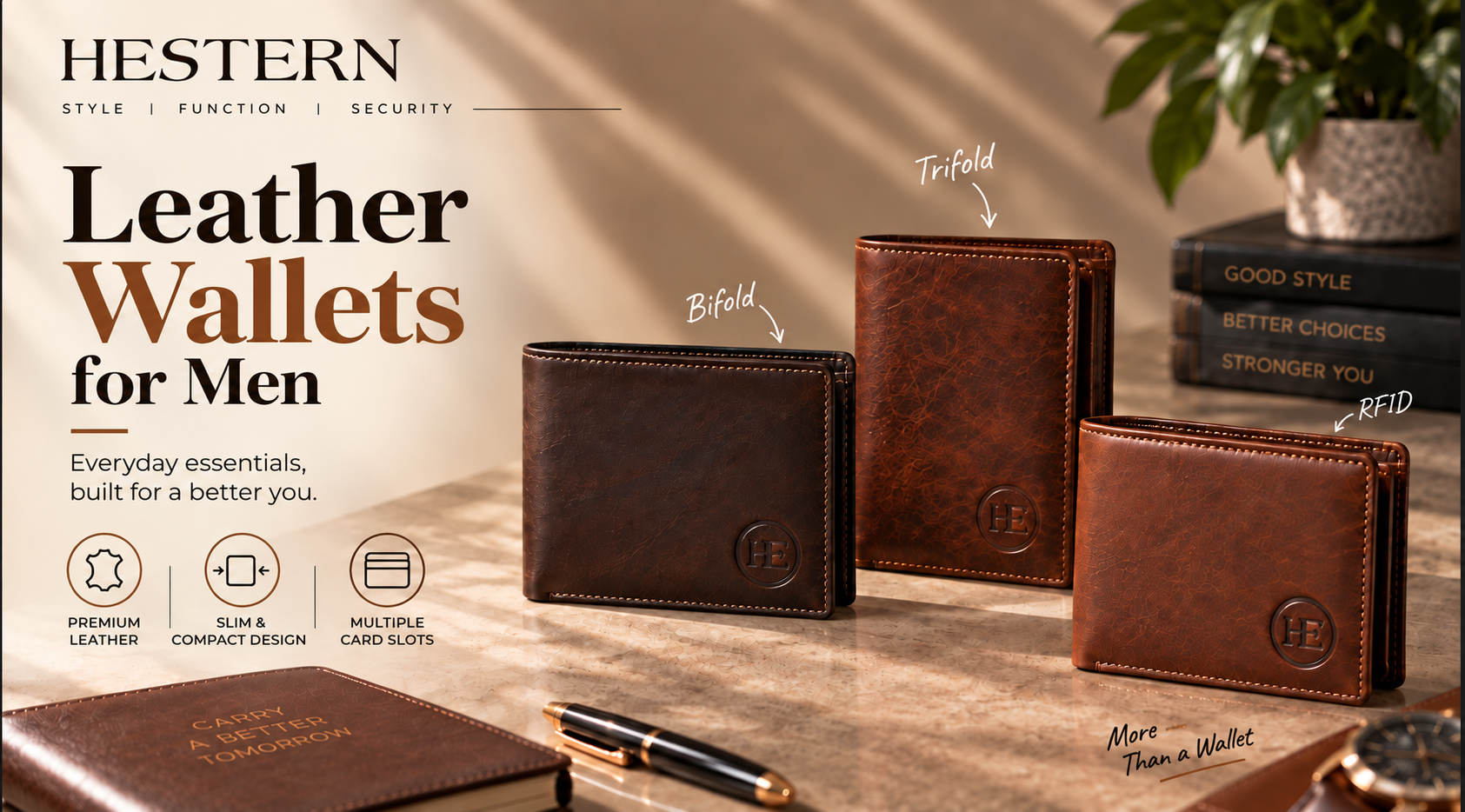
A bifold's about as simple as it gets, it just folds once down the middle, and that's what gives it that slim, rectangular shape most people picture when they think "wallet."
You'll usually get a handful of card slots, a spot for cash, and sometimes a small ID window tucked in there too.
Why people like it:
Thin enough to forget it's even in your pocket
Easy to pull out and put away without any hassle
A clean, no-fuss look that goes with anything
Noticeably lighter than a trifol
Where it comes up short:
Limited space if you carry more than a handful of cards
Cards tend to stack up, so digging for the right one takes a second longer
If your everyday carry is light, one card, some cash, maybe your metro card, a bifold covers you without any fuss.
Trifold Wallets

A trifold has one extra fold compared to a bifold, which splits it into three sections instead of two.
That extra panel usually means more card slots, and often a coin pocket or a second ID slot too.
Why people like it:
Way more space for cards
Keeps things sorted when you're carrying a lot
Works well if you need cash, cards, and ID all in one place
Where it comes up short:
Adds noticeable bulk in a front pocket
Can feel heavier after a full day of carrying it around
If you're someone who keeps their Aadhaar card, a couple of business cards, and some extra cash on hand, a trifold will handle it better, even if it's a bit chunkier.
So Which One Should You Pick
There's no single right answer in the bifold vs trifold wallet debate. It really depends on how you live. If you prefer travelling light and keeping things in your back pocket, go bifold. If storage matters more to you than slimness, go trifold. A lot of 2026 wallet designs have also started blending the two, slim trifolds that hold like a trifold but feel almost as thin as a bifold. Worth a look if you can't decide.
Why an RFID Wallet Matter

Tap-to-pay debit and credit cards, UPI-linked RuPay cards, NFC metro passes, they're all pretty much standard now in most Indian cities. But that convenience comes with a catch. RFID skimmers can pull your card data from a short distance without ever touching your wallet, so it can happen and you'd have no clue it even occurred.
That's the whole reason RFID-blocking wallets exist. They've got a thin metallic layer built into the lining that basically acts as a shield, jamming the radio signal so nothing can scan your cards while they're sitting inside.
Do You Actually Need One
If you regularly carry any of these, it's probably worth it:
- Contactless debit or credit cards
- NFC-enabled office ID badges
- Transit cards (metro, local train passes)
Most decent leather wallet brands in India now build RFID protection in as standard, so you're rarely paying extra for it. It just means checking the product listing before you buy.
How to Pick the Right One in 2026 in India
- Think about how you actually carry things. Cards only, or cards plus cash plus documents?
- Decide on the fold. Bifold for slim, trifold for storage.
- Check for RFID blocking, especially if you use contactless cards often.
- Look at the leather grade. Full-grain lasts the longest, genuine leather is a solid budget option.
- Check the stitching and hardware. Reinforced edges and decent snaps or magnetic clasps hold up longer.
- Pick a colour that works for you. Brown and black stay versatile, and matte finishes are having a moment in 2026.
A Few Extra Things Worth Checking
- A slim profile, under 1 cm for most bifolds
- At least 6 to 8 card slots if you're going trifold
- A coin pocket if you handle cash often
- Clear mention of RFID-blocking in the product description
- Some kind of warranty or craftsmanship guarantee from the brand
Final Thoughts
At the end of the day, choosing a leather wallet doesn't need to be overthought. Look at what you actually carry, decide how much card protection matters to you, and think about how much you value good leather over cheap alternatives. Go slim with a bifold if you travel light, pick a trifold if you're carrying a lot, or grab a hybrid if RFID protection is non-negotiable for you. Real leather rewards you over time, cheap materials just don't hold up the same way. If you're looking for a place to start, Hestern has a solid lineup across all three styles, made with Indian buyers in mind.
FAQs
-
How do I know if I need a new wallet?
Honestly, if the leather's cracking or a card slot's stretched out and cards keep slipping through, that's your sign. No need to wait till it completely gives up on you. -
Genuine leather vs full-grain, same thing?
Not really. Genuine leather's technically real leather but it's the lower grade stuff. Full-grain is the good layer and it just outlasts everything else. -
Will RFID blocking mess with my phone's NFC payments?
No, different system entirely. RFID blocking only protects the actual cards sitting in your wallet, your phone's payments run separately so there's zero interference. -
What's actually different about a hybrid wallet compared to a trifold?
Think of it like a slim wallet that snuck in RFID protection too. You're not adding bulk just to get that extra security. -
How often should I actually condition my leather wallet?
Every couple months does the trick, maybe a bit more if you're somewhere humid. Keeps it from drying out and cracking on you over time.