Cart
0
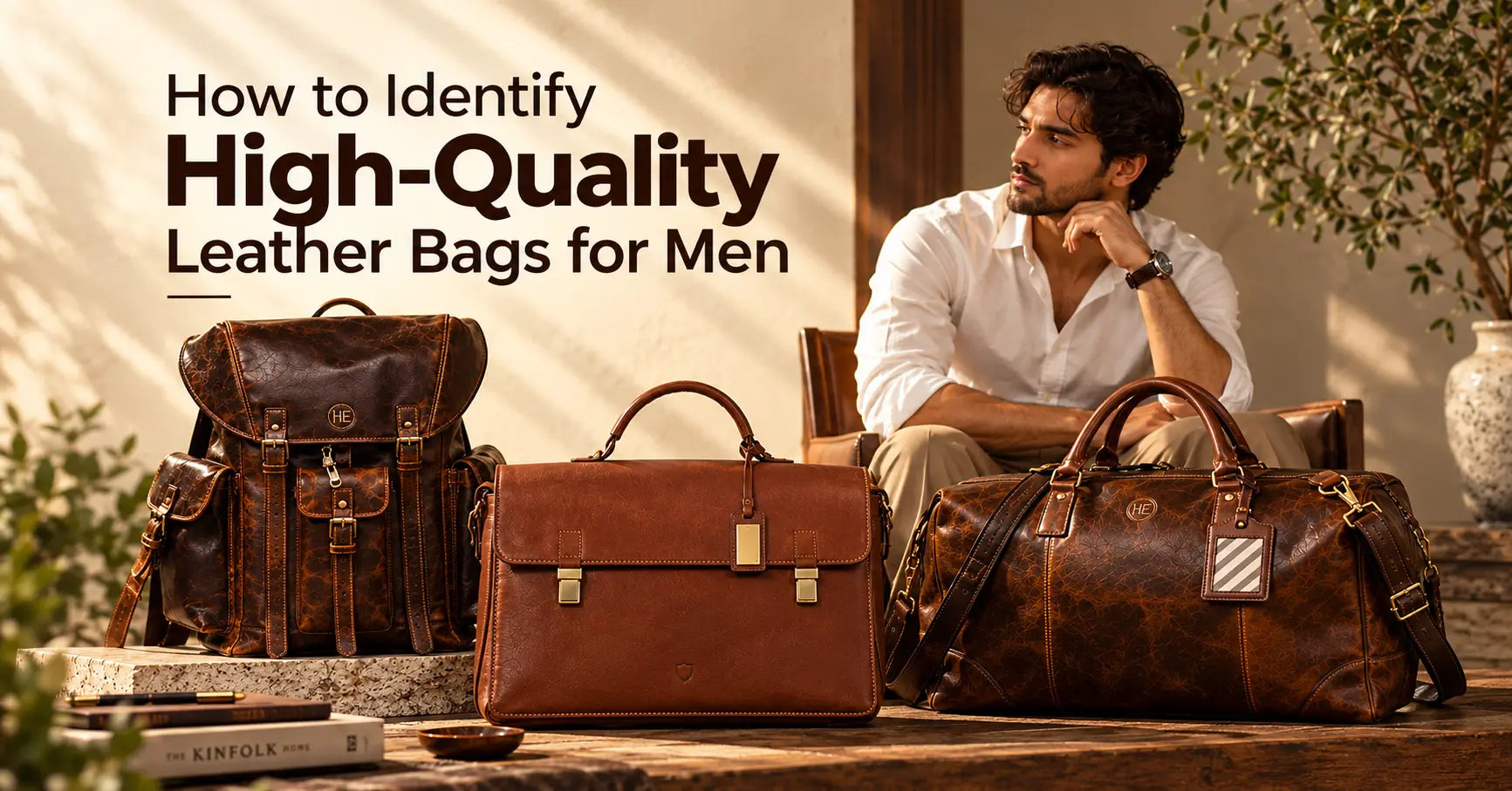
A leather bag’s quality is determined by more than its appearance, leather grade or price. Material properties, seam construction, edge finishing, hardware and reinforcement at load bearing points all influence how the bag responds to abrasion, flexing and repeated use.
This guide gives you a practical 5-minute quality inspection covering the leather, stress points, stitching, edges, hardware and interior construction. You will also learn why full grain leather does not automatically mean superior craftsmanship and which construction details are better indicators of long term durability.
So, before you decide that a bag is “worth it” look a little closer. The real signs of quality are often hidden in the details you might normally overlook. Here is what to check before you buy.
1. Start With the Type and Quality of Leather

Check the type of leather used. Full grain leather is generally considered the highest quality commonly available leather because it retains the natural grain. Top grain leather is also durable but may have a smoother more uniform finish.
Genuine leather simply confirms that the material is real leather . It does not automatically mean premium quality. In many common grading systems, genuine leather can refer to more processed leather. Bonded leather, made partly from leather fibre and other materials is generally less durable.
Good leather should feel substantial yet flexible, with natural variations in color and grain. Thickness should also suit the bag. A structured laptop bag generally needs heavier leather than a lightweight crossbody.
2. Seek a natural texture
The character of leather can be clearly seen from its texture.
Natural leather does not usually have a perfectly uniform surface. Small variations in grain and color are normal and can give the bag a distinctive appearance. Good leather should feel natural and supple rather than overly plastic or artificial.
However, softness alone does not indicate quality. Some vegetable tanned leather can initially feel firm and become softer with use. This natural quality is part of what makes leather appealing, which is why Hestern leather designs aim to retain that traditional charm while meeting modern everyday needs.
3. Look at the Stitching
No matter how good the leather is.. the bag will not last if the sewing is weak. Check that the stitching is even, neat and secure, particularly around:
- Shoulder straps
- Handles
- Corners
- Pockets
- Bag openings
You can also consider stitches per inch (SPI). Consistent stitching is often used on quality leather goods, but more stitches do not automatically mean greater strength.
The stitching method matters too. Hand saddle stitching uses two needles passing through the same hole from opposite sides. If one section breaks, the whole seam is less likely to unravel. Machine lockstitching can also be highly durable when properly executed, so focus on consistency, thread quality and reinforcement rather than the method alone.
4. Examine the Edges and the Finishing
Look carefully at the edges around the handles, pockets, flaps and main openings. They should be smooth and properly finished, with no excessive adhesive, ragged fibre or unfinished sections.
You may see three common finishes:
- Burnished edges: polished and compressed to create a smooth surface.
- Painted edges: coated to create a clean, uniform appearance.
- Folded edges: leather is folded around the edge to protect the raw surface.
A good edge finish makes the bag look cleaner and can help protect exposed leather fibre.
5. Check the hardware
Do not overlook the zippers, buckles, clasps and rings. These are load bearing components that experience friction, tension and repeated mechanical stress. Look for solid brass or stainless-steel hardware, which generally offers better strength and corrosion resistance.
Zippers should run smoothly without catching, while buckles and rings should be securely attached. High stress points, such as strap rings, should have reinforced stitching or rivets to distribute the load and prevent premature failure.
6. Check the Handles and Straps

Check out the product Outlander Vintage Leather Backpack - Rustic Brown
The straps and handles carry the weight of the bag, so they need special attention.
Look at how securely they connect to the main body. High stress points should have strong stitching, reinforcement or suitable hardware.
The strap should also be comfortable and appropriate for the weight of the bag. A heavy laptop bag with a narrow strap. for example, may become uncomfortable during daily use.
Hestern combines the traditional look of leather with practical features suited to work, school, travel and everyday activities.
7. Do not ignore the interior

A bag can look attractive outside but still be impractical inside. Check the lining, pockets, compartments and available space.
A well-designed leather bag should make it easy to organize daily belongings. Depending on your needs, useful features may include:
- Laptop compartment
- Document storage
- Small organizer pockets
- Secure spaces for valuables
Also check that the lining and pockets are securely attached. Good exterior craftsmanship should be matched by a well constructed interior.
8. Examine the Overall Craftsmanship

Before buying, look at the entire bag rather than one feature.
Check the
- Stitching
- Seams
- Panel alignment
- Hardware placement
- Edges
- Lining
- Handles
- Overall finishing
The tanning method can also tell you more about the leather. Vegetable tanned leather is known for developing a distinctive patina as it ages, while chrome tanned leather is generally softer, more flexible and consistent in appearance. Neither is automatically better, the right choice depends on the desired feel and use.
Hestern focuses on combining the traditional appearance of leather with clean and practical design.
Quick Checklist for Buying a Leather Bag
| Feature | What to Look For |
|---|---|
| Leather | Natural texture and substantial feel |
| Leather type | Clear information about the leather used |
| Thickness | Appropriate for the purpose |
| Tanning | Suitable vegetable or chrome tanning |
| Stitching | Even, secure and consistent |
| Edges | Cleanly burnished, painted or folded |
| Hardware | Strong and smooth operating |
| Handles | Secure and reinforced |
| Interior | Practical compartments and lining |
| Craftsmanship | Consistent attention to detail |
| Longevity | Suitable for regular use |
Final Thoughts
To identify a genuinely high quality leather bag, you have to go beyond the tag.
Look at the leather, grain, thickness, tanning method, stitching, edges, hardware, handles, interior and overall craftsmanship. A good leather bag should be stylish while also being comfortable, practical and sturdy enough for everyday use.
If you are looking for a leather bag for men that combines classic design, everyday usefulness and good craftsmanship, Hestern is a worthwhile option to consider. Take a look at Hestern range of men leather bags and select a style suitable for your daily journeys.
Frequently Asked Questions
1. What is the best leather for bags?
Full grain leather is often considered the best choice for its durability and ability to develop a rich patina. Top grain leather is another good option for a smoother and more uniform finish.
2. How can you tell if a leather bag is good quality?
Check the leather grain, stitching, edge finishing, hardware and stress points. A well made bag should have secure seams, reinforced handles and neatly finished edges.
3. What is the difference between genuine leather and full grain leather?
Full grain leather retains the natural grain and is generally valued for its durability. Genuine leather is a broader term for real leather and does not necessarily indicate the highest quality.
4. How do you take care of a leather bag?
Clean it with a soft cloth, use a suitable leather conditioner when needed and keep it away from prolonged moisture and direct sunlight. Store it in a breathable dust bag to help maintain its shape and finish.