Cart
0
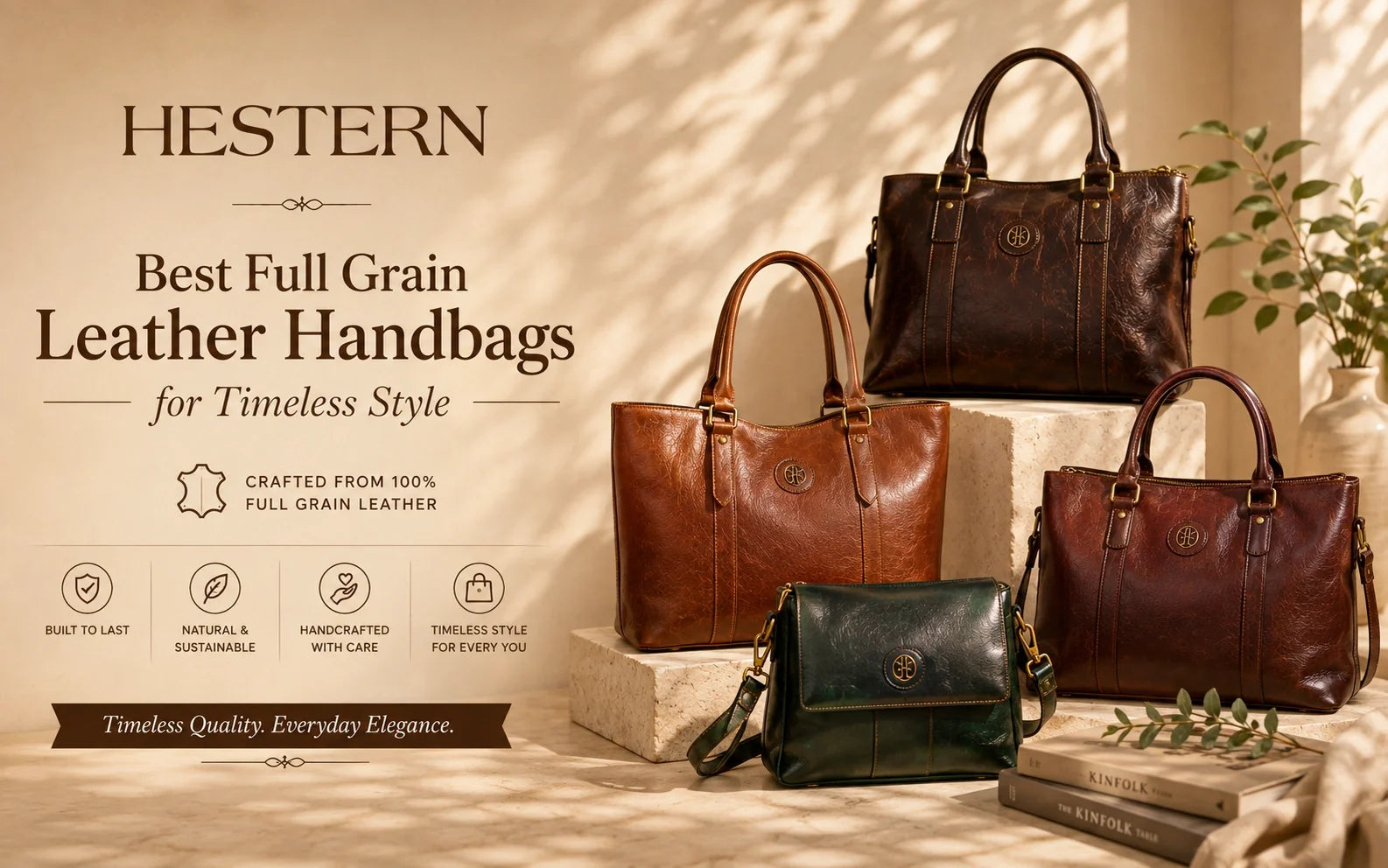
If you have ever compared two "leather" handbags side by side and wondered why one feels like a heirloom and the other feels like it will crack within a year, the answer usually comes down to one thing: the grain. Full grain leather handbags sit at the top of that hierarchy, and once you know what to look for, you will never shop for a bag the same way again.
This guide walks through what full grain leather actually is, why it ages so well, how to pick the right handbag for your lifestyle, and what to check before you buy. There's a comparison table, a care routine, and answers to the questions people ask most.
What Makes Full Grain Leather Different
Leather is graded by how much of the hide's outer layer survives processing. Full grain leather keeps the entire top layer intact, including the natural grain, pores, and minor imperfections. Nothing is sanded off, nothing is buffed away. That top layer is the densest, strongest part of the hide, which is why full grain leather resists wear better than any other grade and develops a patina, a gradual darkening and softening, instead of just breaking down.
Top grain leather, by comparison, has the outermost layer sanded and often coated with a finish to hide flaws. It looks more uniform out of the box but loses some of the fiber strength in the process. Genuine leather and bonded leather sit lower still, made from split layers or scraps bonded together with adhesive.
Here's how the grades stack up:
| Leather Type | Durability | Patina Development | Price Range | Best For |
|---|---|---|---|---|
| Full Grain | Highest | Rich, natural patina over years | Premium | Long-term investment pieces |
| Top Grain | High | Minimal, finish resists change | Mid-range | Everyday bags with a polished look |
| Genuine Leather | Moderate | Little to none | Budget-mid | Casual, short-term use |
| Bonded Leather | Low | None | Budget | Not recommended for handbags |
A quick way to tell full grain leather in a store: press your thumb into it. If you see the pores and a faint texture that looks almost like skin rather than a printed pattern, you are likely looking at the real thing. Cheaper leathers often have a suspiciously even texture stamped on by machine.
Why Full Grain Leather Handbags Age Better Than They Look New
Most materials look their best on day one and decline from there. Full grain leather does the opposite. The oils in the leather interact with light, air, and the natural oils from your hands, and the surface slowly darkens and gains character. A full grain tote you buy today will, ten years from now, look like it has a history, not just wear and tear.
That is the real argument for spending more upfront. A top grain or bonded leather bag might match a full grain bag in appearance for the first six months. After that, the difference becomes obvious: cracking at the fold lines, peeling at the corners, a finish that flakes off where your hand grips the strap. Full grain leather doesn't have a finish to peel because there wasn't one to begin with.
How to Choose the Right Full Grain Leather Handbag
Picking a handbag isn't only about the leather grade. Fit it to how you actually live.
Daily commuters want a structured tote or a satchel with a secure top closure, enough room for a laptop or documents, and a strap that sits comfortably on the shoulder for a full day.
Frequent travelers benefit from a crossbody or a convertible bag that can be worn hands-free, with RFID-safe pockets and a strap long enough to sit across the body without digging in.
Evening or occasion bags can be smaller and lighter, prioritizing a refined finish (a croc-embossed or suede-finish full grain leather, for instance) over storage capacity.
Everyday minimalists tend to do best with a mid-size shoulder bag or hobo style that holds essentials without becoming bulky.
If you're weighing full grain against other options for your own use case, Hestern's full grain leather bag collection is a reasonable place to see the grade applied across totes, satchels, and slings side by side, so you can judge the texture and weight in context rather than in the abstract.
Hardware, Stitching, and Lining: The Details That Reveal Quality
The leather itself only tells half the story. Two full grain bags can use identical hide and still differ enormously in how long they last, because of what holds them together.
| Detail to Check | What Good Looks Like | Warning Sign |
|---|---|---|
| Stitching | Even, tight, double-stitched at stress points | Loose threads, uneven spacing |
| Hardware | Solid brass or antique-finish metal, no visible plating flake | Lightweight, shiny gold-tone that scratches easily |
| Lining | Cotton twill or suede, securely sewn in | Thin, glued-in polyester lining |
| Zippers | Smooth pull, branded zipper heads (YKK is a common quality marker) | Sticky action, unbranded zipper |
| Edges | Burnished or painted edges, no fraying | Raw, unfinished edges that will fray with use |
Stress points, where the strap meets the body of the bag, and the base corners, are where cheap construction fails first. Run your fingers along those seams before buying, whether in store or by reading close-up product photos online.
Colors and Finishes That Stay Timeless
Full grain leather takes color and finish differently depending on the tanning process, and some choices age more gracefully than others.
- Tan and cognac develop the most visible patina and are the most forgiving of scuffs, since minor marks blend into the natural color variation.
- Black stays formal and versatile but shows scuffs more visibly on the surface, though the deep grain still hides most wear.
- Deep brown or espresso sits between the two, warming slightly over time without dramatic color shift.
- Embossed finishes, like croc-texture full grain leather, add visual interest while keeping the strength of the full grain base underneath.
For a bag meant to last a decade, tan and mid-brown tones tend to be the safest choice. They hide the small dings that come with real use, which is exactly the point of full grain leather in the first place.
Caring for a Full Grain Leather Handbag
Full grain leather rewards a little maintenance with a lot of longevity. The basics:
- Keep it out of direct sun for long periods; UV exposure dries out the oils and can cause uneven fading.
- Condition it every few months with a leather-specific conditioner, more often in dry climates.
- Wipe off dirt with a slightly damp cloth, then dry naturally, never with direct heat.
- Store it stuffed with tissue or a bag pillow so it holds its shape when not in use.
- If it gets wet, especially during monsoon season, let it air-dry away from heaters or hair dryers.
If you want a full breakdown of monsoon-specific leather care, Hestern has a dedicated guide on how to take care of leather bags during monsoon that covers moisture control and storage in more depth than the summary above.
Where to Look When Shopping for One
A few practical checkpoints before you commit:
- Ask directly whether the product is full grain or top grain. Listings sometimes use "genuine leather" as a catch-all term that says nothing about grade.
- Compare weight. Full grain leather is denser and noticeably heavier than bonded or coated alternatives of the same size.
- Check the return policy. A bag that's uncomfortable on the shoulder or doesn't match the photos should be easy to send back.
- Look for a warranty on craftsmanship, not just on materials. Stitching failures are usually a construction problem, not a leather problem.
If handbags specifically are what you're after, rather than the wider full grain category, Hestern's designer leather handbags collection groups totes, satchels, and shoulder bags together, which makes it easier to compare silhouettes once you already know you want the full grain grade.
Full Grain vs. Top Grain: A Side-by-Side Snapshot
| Factor | Full Grain Leather | Top Grain Leather |
|---|---|---|
| Surface | Natural, unaltered grain | Sanded and refinished |
| Strength | Retains full fiber structure | Slightly reduced after sanding |
| Look Over Time | Develops patina, gains character | Stays mostly static, may crack at finish |
| Water Resistance | Naturally more resistant | Depends on applied coating |
| Weight | Heavier | Lighter |
| Typical Lifespan | 10+ years with care | 5-8 years |
Neither grade is "wrong." Top grain has its place for lighter, more affordable bags. But if the goal is a handbag you'll still be carrying, and still liking, in a decade, full grain is the grade built for that.
Final Thoughts
A full grain leather handbag isn't the cheapest option on the shelf, and it was never meant to be. What you're paying for is a hide that hasn't been sanded down to hide its flaws, hardware and stitching built to handle daily stress, and a material that looks better with age instead of worse. Check the grain, check the stitching, pick a color that hides the small marks of real use, and you'll end up with a bag that outlasts most trends it was bought alongside.
Frequently Asked Questions
1. Is full grain leather worth the extra cost compared to top grain?
For most people planning to use a bag for years rather than one season, yes. Full grain leather keeps the hide's natural fiber structure intact, so it resists tearing, sagging, and cracking far longer than top grain. The upfront price is higher, but the cost per year of use often ends up lower since you're not replacing the bag every couple of seasons. If you only need a bag for occasional or short-term use, top grain can be a reasonable compromise.
2. How can I tell if a handbag is genuinely full grain leather before buying?
Look closely at the surface texture. Full grain leather shows natural variation, small pores, faint scars, and grain lines that aren't perfectly uniform. A pattern that looks stamped or too evenly repeated is usually printed onto a lower grade. Full grain also feels denser and heavier for its size. When shopping online, read the product description carefully, since terms like "genuine leather" don't guarantee full grain, and ask the seller directly if it isn't specified.
3. Does full grain leather scratch or scuff easily?
It marks more visibly than coated leathers at first, since there's no polyurethane layer to protect the surface. But those marks are usually shallow and fade or blend in as the leather develops its patina. Minor scuffs on full grain leather often become part of the character of the bag rather than permanent damage. Deeper cuts are less likely though, since the leather's density resists punctures better than thinner, processed grades.
4. How long does a full grain leather handbag typically last?
With reasonable care, a well-made full grain leather handbag can last a decade or more, and many owners keep them for far longer. Lifespan depends as much on construction quality, stitching, hardware, and lining, as on the leather itself. Conditioning it a few times a year, avoiding prolonged sun exposure, and letting it dry naturally after rain all extend its life considerably compared to a bag left unmaintained.
5. Can full grain leather handbags get wet, or do they need special protection? Full grain leather has natural water resistance because the pores haven't been sanded open, but it isn't waterproof. Light rain is generally fine if you wipe it down and let it air-dry afterward. Prolonged soaking can leave water spots or stiffen the leather if it dries too quickly near heat. Applying a leather protectant occasionally helps, especially before monsoon season or humid weather, and keeps the surface from absorbing moisture too readily.