Cart
0
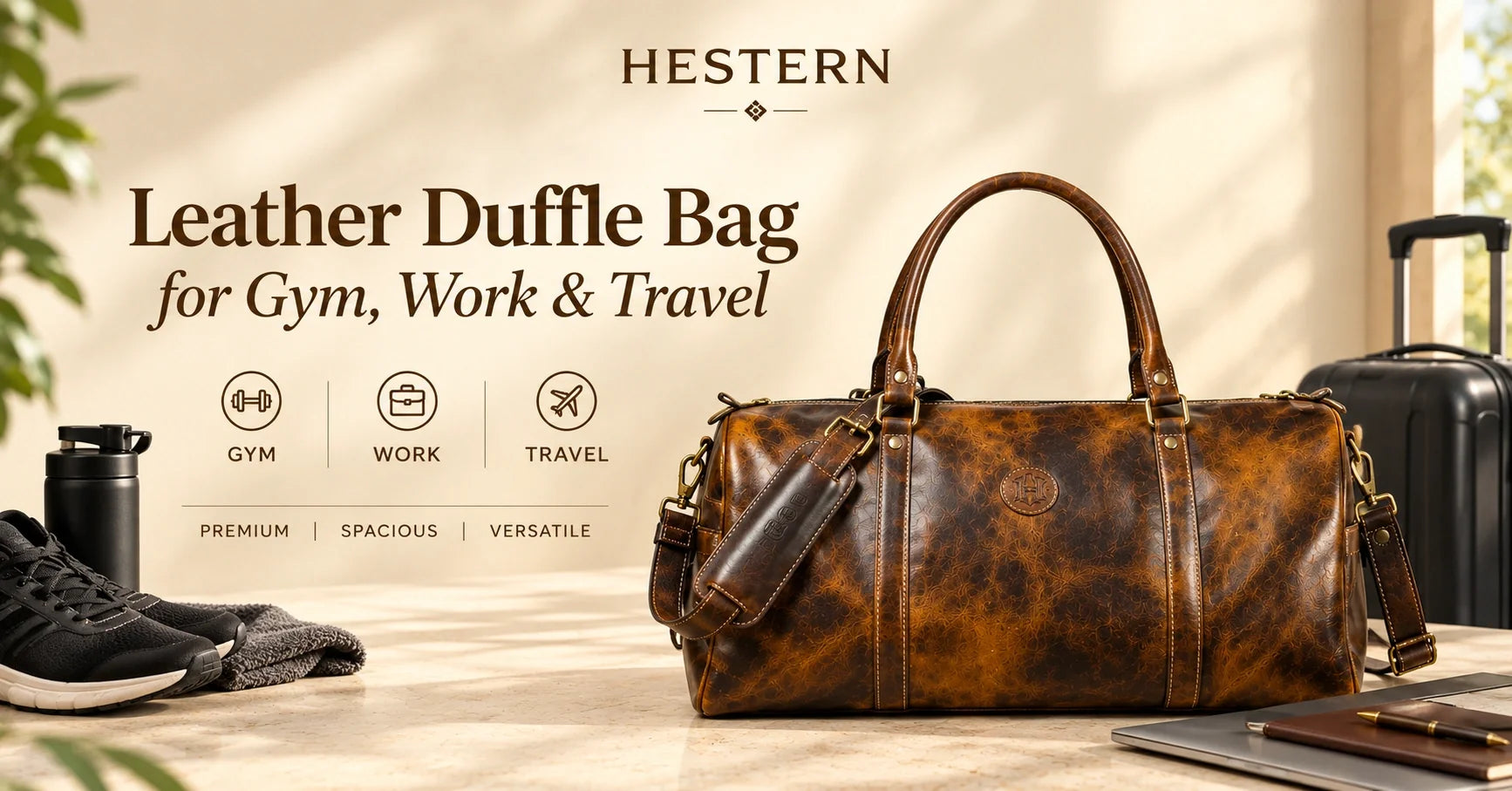
A gym bag that falls apart in six months. A work bag that looks fine in the office and ridiculous at the airport. A "travel" bag with one giant compartment where your shoes end up touching your shirts. Most men own three different bags because none of them do everything well.
A good leather duffle bag is the fix. Not a trend, not a flex piece for Instagram, just a bag built well enough that it works whether you're heading to a 6am gym session, a client meeting, or a weekend flight. This guide walks through why leather still beats the alternatives, what to actually check before buying, and how to use one bag for three completely different parts of your week.
Why Leather Still Wins Over Canvas or Nylon
Canvas duffles are cheap and nylon ones are light, so it's fair to ask why leather is worth the extra money.
Three reasons, and none of them are about status.
It survives daily abuse. Gym floors, overhead bins, the trunk of a cab. Leather takes scuffs and just develops character instead of falling apart. Nylon frays at the seams. Canvas sags and stains.
It doesn't need a replacement in a year. A full-grain leather duffle, cared for reasonably, will outlast three or four synthetic bags. You're not buying a bag, you're buying the last bag in that category you'll need to buy.
It moves between settings without looking out of place. This is the part people underestimate. A nylon gym duffle in a client meeting reads as careless. A leather one doesn't. You walk into the office looking like you have your life together, even if you're actually just coming from the gym.
Full-Grain vs Top-Grain: The One Spec Question That Actually Matters
Every leather duffle bag listing throws around terms like "genuine leather" and "premium hide," and most of it is marketing noise. The one distinction worth knowing is full-grain versus top-grain.
Full-grain leather uses the entire hide, including the outer layer with its natural grain and imperfections intact. It's the strongest, most durable option, and it develops a patina over years of use that synthetic materials can never fake. The trade-off is a slightly higher price and a look that's more rugged than polished straight out of the box.
Top-grain leather has that outer layer sanded down and refinished, which makes it smoother, more uniform, and a bit more resistant to staining. It's a fair middle ground if you want something that looks sharp on day one without waiting for a patina to build.
Neither is "wrong." A gym bag that's going to see sweat, grass, and gym-floor grime might be better off in full-grain, where scuffs blend into the character of the leather. A bag that's mostly living in an office or business-class overhead bin can lean top-grain for that cleaner finish.
The Gym: Where Most Duffle Bags Actually Fail
Gym duffles get more daily wear than almost any other bag category, and it shows. Zippers blow out. Straps stretch. The bottom soaks through after one rainy jog to the car.
What to look for if the gym is a primary use case:
-
A separate shoe compartment. Sweaty trainers should never touch your clothes. Look for a bottom pocket or side panel built specifically for shoes.
-
A ventilated section for gym clothes. Damp gear needs airflow, not a sealed pocket that turns into a mildew incubator by lunchtime.
-
A reinforced, flat base. Gym bags get set on locker room floors constantly. A structured bottom keeps the bag standing and keeps the leather from stretching out of shape.
-
Metal zippers, not plastic. Plastic zippers are the first thing to fail under daily use, and they fail exactly when you're in a rush before a workout.
A well-designed leather gym duffle should smell like leather, not like last week's laundry. If a bag doesn't have any ventilation built in, that's a real design flaw, not a minor inconvenience.
The Office: Carrying a Duffle Without Looking Like You Just Left the Gym
Here's the honest part: not every leather duffle works for the office. Some are too casual, too bulky, or too obviously athletic in shape to sit next to a desk without comment.
What separates an office-appropriate duffle from a strictly casual one:
-
A structured, boxy shape rather than a soft, slouchy one. Structure reads as intentional. Slouch reads as a gym bag.
-
A padded laptop sleeve. If you're carrying a duffle to work, it needs to double as a laptop bag, or you're carrying two bags, which defeats the point.
-
Darker, more restrained colors. Black, espresso brown, and deep tan work in a boardroom. Bright colors and heavy hardware don't.
-
Minimal external branding. A bag covered in logos looks like sportswear. A clean, unbranded leather duffle looks like an accessory a grown adult picked deliberately.
If your work involves a mix of desk time and travel, a duffle with a laptop compartment genuinely replaces a briefcase for a lot of men. For a deeper look at picking between the two, this comparison of leather briefcases for office and business use breaks down when a structured briefcase still makes more sense than a duffle.
Travel: The Category the Duffle Was Actually Built For
This is where a Leather Duffel Travel Bag earns its keep. Weekend trips, short business travel, anything under a week, a well-built duffle beats a rolling suitcase on convenience alone. No wheels catching on cobblestones, no fighting for overhead bin space with a hard-shell case, no waiting at baggage claim.
For travel specifically, prioritize:
-
Carry-on friendly dimensions. Most airlines allow duffles roughly 45 to 55 liters as a carry-on if the shape is right, but check your specific airline before you're standing at the gate arguing about it.
-
A trolley sleeve. A strap on the back that slides over a rolling suitcase handle turns a two-bag trip into a one-hand-free trip. Small detail, huge difference at a crowded airport.
-
A detachable, adjustable shoulder strap. You'll want to hand-carry it through security and sling it over a shoulder on the walk to the gate. Both should be comfortable.
-
Interior organization. A single open cavity means digging through everything to find your charger. Multiple pockets, a document sleeve, and a zippered interior pocket for valuables make a real difference on a trip.
A duffle that's genuinely built for travel will also hold up to the wear travel involves: overhead bins, taxi trunks, being tossed onto hotel beds. That's where the leather quality conversation from earlier actually pays off.
Sizing: Match the Bag to the Trip, Not the Other Way Around
A common mistake is buying one duffle and expecting it to handle everything from a gym session to a week-long trip. Size matters more than most buyers think going in.
-
Under 30 liters — gym sessions, day trips, overnight stays where you're not checking anything.
-
35 to 45 liters — the sweet spot for most men. Handles a long weekend, doubles as a carry-on, still fits comfortably as an office bag.
-
50 liters and up — week-long trips, or if you routinely overpack (no judgment).
If you're only buying one bag and want it to genuinely cover gym, work, and travel, the 35 to 45 liter range is where most people land. It's roomy enough for a weekend away without becoming awkward to carry on a daily commute.
Hardware, Stitching, and the Details That Predict How Long It Lasts
The leather gets all the attention, but hardware and stitching are what actually fail first on a cheap bag.
Zippers should move smoothly without snagging, and metal pulls last longer than plastic ones. Stitching should be even and, ideally, double-stitched at stress points like the strap attachments and the base. Buckles and D-rings should be solid metal, not a hollow-feeling plated plastic that'll crack within a year. Pick the bag up empty and give the strap attachment points a firm tug. If anything flexes or creaks, that's a preview of what happens after six months of real use.
Caring for a Leather Duffle So It Actually Lasts
Leather rewards a small amount of maintenance with a very long lifespan.
Keep it out of direct sun for long stretches, since UV exposure dries leather out and fades color unevenly. Wipe down dust and dirt with a slightly damp cloth rather than letting it build up. Condition the leather every few months with a proper leather conditioner, especially if the bag travels often or sees a lot of temperature and humidity swings. If it gets wet, let it air dry naturally away from direct heat. A radiator or hairdryer will crack leather faster than almost anything else.
None of this is complicated. It's closer to the maintenance a good pair of leather shoes needs than anything demanding.
Building Out a Full Leather Kit
A duffle rarely travels alone. If you're investing in one, it's worth thinking about how it fits with the rest of what you carry. A leather backpack covers the daily commute when a duffle is overkill. A leather laptop bag handles desk-only days. Together with a duffle for travel and gym days, that's a complete kit that covers essentially every scenario a working adult runs into without duplicating function. Browsing the full range of leather bags for men is a reasonable next step if you're building this out piece by piece rather than buying everything at once.
Final Thought
The best leather duffle bag isn't the one with the most compartments or the flashiest hardware. It's the one that matches how you actually move through a week: gym at 6am, meetings by 9, a flight out on Friday. Buy for that reality, check the leather grade, check the stitching, and get a size that fits your actual trips instead of an aspirational version of them. Do that, and this becomes the one bag you stop thinking about and just grab on the way out the door.
Frequently Asked Questions
1. Is a leather duffle bag good for the gym, or will it hold moisture and smell?
A well-designed one is fine. The key is a separate, ventilated compartment for sweaty clothes and shoes so damp gear isn't sealed against the leather. Avoid bags with a single sealed main compartment if the gym is a regular use case.
2. Can I carry a leather duffle bag as an airline carry-on?
Most duffles in the 40 to 50 liter range fit standard carry-on allowances, but sizing rules vary by airline, especially with budget carriers. Check the exact dimensions listed for your airline before you travel, not just the bag's advertised capacity.
3. What's the real difference between full-grain and top-grain leather duffle bags?
Full-grain uses the entire hide and is the more durable option, developing a natural patina over time. Top-grain is sanded and refinished for a smoother, more uniform look at a slightly lower price. Both hold up well; the choice comes down to finish preference and budget.
4. How do I stop a leather duffle bag from looking too casual for the office?
Look for a structured, boxy shape rather than a soft slouchy one, a padded laptop sleeve, and a darker, more restrained color like black or espresso brown. Minimal external branding also makes a big difference in how formal the bag reads.
5. How long should a good leather duffle bag actually last?
With reasonable care, including regular conditioning and keeping it out of prolonged direct sun, a full-grain leather duffle can last well over a decade of regular use. That's the main argument for spending more upfront rather than replacing a cheaper synthetic bag every year or two.