Cart
0
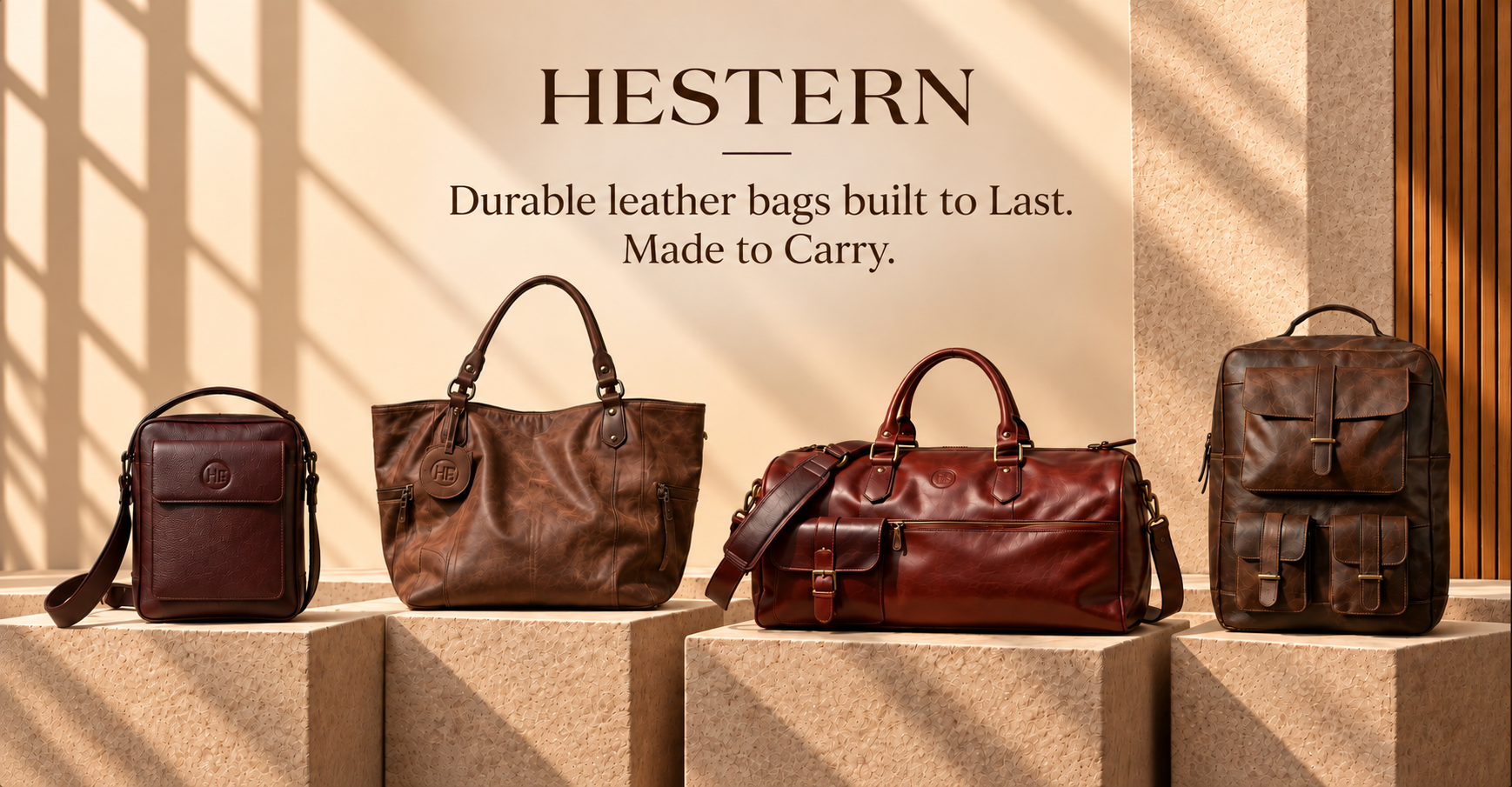
You drop real money on a leather bag, it looks fantastic walking out of the store, and a year later the corners are already peeling. Sound familiar? It's rarely bad luck. Usually it comes down to four things: the leather itself, the stitching, the hardware, and what's holding the inside together. Get those right and the bag lasts, whether it's a leather tote, a leather crossbody, or a leather travel bag. Brands like Hestern that stick to full-grain leather tend to survive all the humidity and all the heat a lot better than the ones cutting corners you can't see until it's too late.
What Makes a Leather Bag Durable
Start With the Grade of the Hide
"Leather" on a tag means almost nothing on its own. There are grades, and the gap between the top and bottom is huge.

- Full-grain leather: the outer layer, nothing sanded off. Keeps the scars and pores, which is exactly why it ages well instead of falling apart. It'll look better in year eight than it did in week one.
- Top-grain leather: buffed a little. Smoother, more uniform, less character, but still proper leather that takes years of daily use.
- Genuine leather: catches people out. Sounds like a guarantee, it isn't. It's a lower split of the hide, about the weakest thing that can still be called leather.
- Bonded leather: worse again. Dust and offcuts glued to fabric, then coated to look real. Give it eighteen months and the coating starts lifting at the corners.
Stitching and Seams

Turn the bag over and look at the seams. Saddle stitching, two needles and interlocking thread, is what you want. If one thread gives out, the rest holds. A machine lockstitch can unravel from a single break.
Check the stress points too: strap anchors, base corners, anywhere the bag pulls against itself. Those should be reinforced or riveted. Wandering, uneven stitching isn't a handmade charm thing, it's someone rushing.
Hardware

Zippers and buckles are usually the first thing to fail on a cheap bag. Solid brass or stainless steel takes years of use and a bit of rain without seizing up. Zinc alloy, what most budget bags use, tends to stick, bend, then snap. YKK on the zipper pull is a decent shortcut if you're unsure.
What's Going On Inside
Pick the bag up when it's empty and see what it does. Does it hold its shape, or just fold in on itself? That's the internal frame or base doing its job, or not doing it, and it's the difference between a tote that stays upright and one that turns into a floppy mess the second you drop a laptop in. Worth checking the lining too while you're at it. Cotton canvas and microfiber hold up fine over the years. Thin, shiny polyester is usually the first thing to go, and it almost always tears right where a pocket meets the side panel.
How Long Do Leather Bags Actually Last?
Treat a full-grain bag decently, condition it now and then, keep it out of harsh sun and standing water, and you're genuinely looking at 15 to 30 years. These are the bags people end up passing down to their kids.
Bonded or heavily coated leather is a completely different story. You're lucky to get one to three years before it starts cracking, and less than that if you're carrying it every day. That gap only gets worse somewhere hot and humid like much of India, where any leather that wasn't tanned and finished properly just doesn't stand a chance.
Durable Leather Bags That Last a Lifetime
Skip whatever's trending this season and look for the basics instead:
- Full-grain or vegetable-tanned leather
- Stitched seams you can actually see, not glued ones hidden away
- A brand willing to repair the bag, or at least back it with a warranty
- A shape that isn't going to look dated in five years
Durable Leather Work Tote Bags
This one's a different job entirely. It has to protect a laptop through hundreds of commutes, rain or shine.
Look for a padded compartment tote bag, not a slip pocket with some hopeful branding stitched onto it. A flat base so it stands up on its own next to your desk instead of tipping over. Straps you can adjust or take off. Some water resistance, because sooner or later you'll get caught out.
Corners are usually the first thing to give on thinner leather, so check whether they've actually been reinforced. Scuffed corners on a two-year-old work bag tell you everything about how thin the leather really was. Hestern woven leather work tote is a decent example of doing it right: full-grain panels, a proper structured base, and a main compartment that's actually built for a laptop instead of a slip pocket bolted on as an afterthought.
Durable Canvas Crossbody Bags With Leather Trim
If you don't want to spend full-leather money, this is a good place to land.
Waxed canvas at 12oz or heavier is what you're after; anything thinner is really jacket fabric, not bag fabric. The leather should show up where the bag actually takes a beating: strap ends, corners, the flap edge, not just sprinkled on for looks. And check for metal rivets joining the canvas to the leather. Stitching alone through two very different materials wears out faster than you'd expect. One thing worth knowing: quite a few leather-first brands, Hestern among them, don't bother with canvas hybrids at all and just build their crossbody bags in full-grain leather from top to bottom. So if the canvas look is specifically what you're after, read the materials list closely instead of assuming it's there.
Leather Travel Bags for Men
Airports are brutal on luggage: overhead bins, conveyor belts, handlers at the end of a long shift, weather at both ends of the trip.
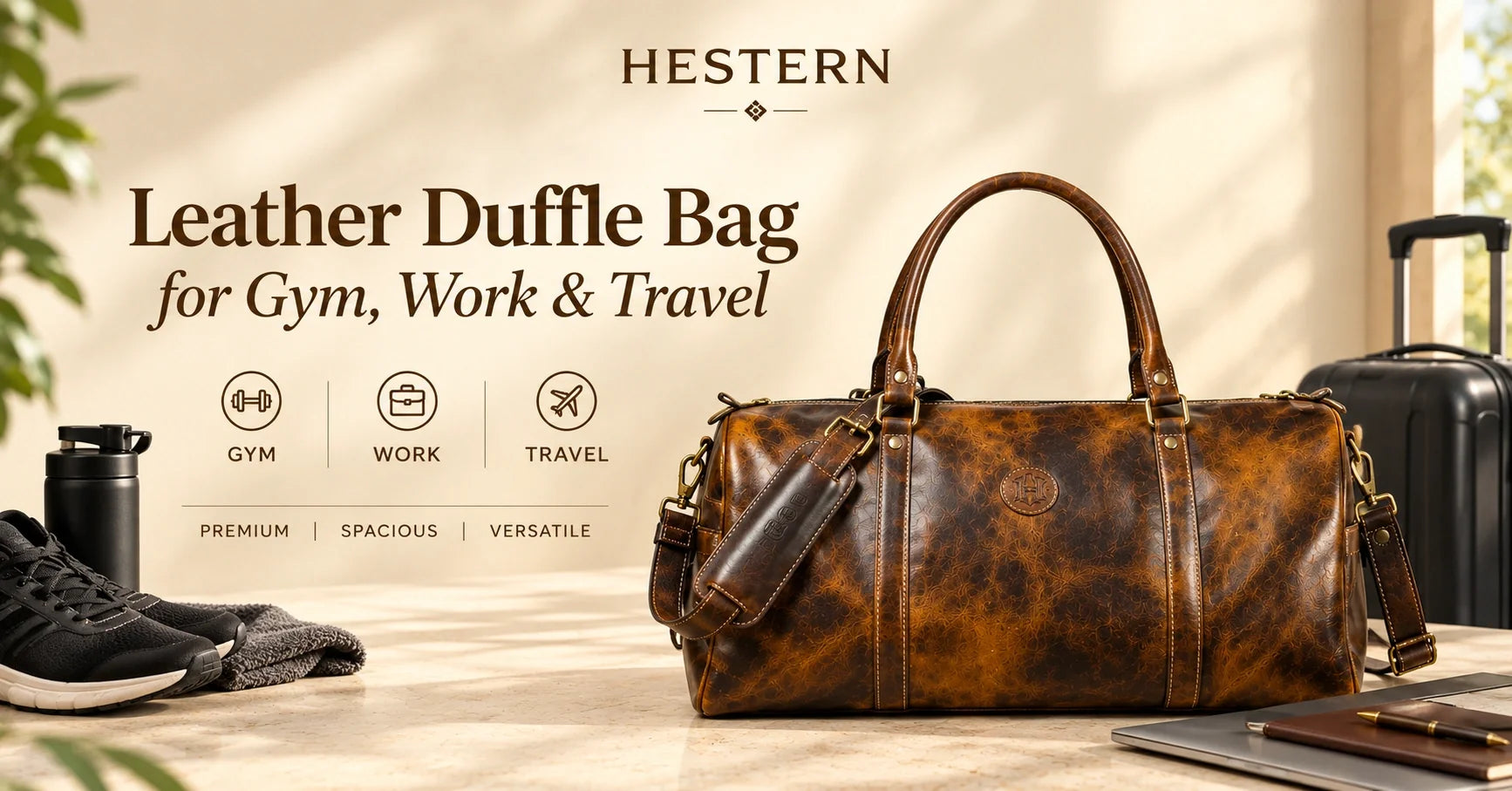
Go heavier here. Full-grain leather with real weight to it, reinforced corners, studs on the base so it isn't sitting directly on wet pavement. A solid top handle plus a detachable shoulder strap. Lockable zippers. Enough structure that it doesn't collapse when you've packed it badly, which you will. Hestern leather travel duffel fits this brief: full-grain buffalo leather, aged brass hardware, and enough structure to hold its shape even when packed unevenly.
One detail worth paying for: a sleeve on the back that slides over a suitcase handle. It sounds minor, but you'll use it on every single trip.
Where to Buy Durable Leather Bags Online
- Read material descriptions closely: "genuine leather" and "full-grain" are not the same thing, and sellers know it.
- Check whether the return policy covers defects, or only a change of heart about color.
- Scroll past the studio photography to the customer photos. That's where you see what the bag actually looks like after six months.
- Favor brands that offer repairs or sell their own care kits. It's a sign they expect the bag to survive.
- Compare the listed weight against the size. A bag that feels suspiciously light for its dimensions is usually thin leather.
If you've never heard of the brand, stick to a marketplace or store with a real returns process. That matters even more if you're shopping from India, where sending an international leather bag back can turn into a slow, expensive hassle if it shows up nothing like the listing. Hestern is a decent example of doing this the right way, every product page actually names the leather type, full-grain, top-grain, buffalo, instead of hiding behind the word "leather," and the bags come with a genuine lifetime warranty on the craftsmanship. You don't have to buy from them for that to be the standard worth holding every leather brand to.
Quick Checklist: Spot a Durable Leather Bag Before You Buy
✅ Leather grade stated clearly (full-grain or top-grain)
✅ Even stitching, reinforced where it counts
✅ Brass, stainless steel, or another hardware metal that won't corrode
✅ A base or internal frame with real structure
✅ Cotton canvas or microfiber lining, not thin polyester
✅ Handles riveted or cross-stitched, never just glued
✅ A warranty, a repair service, or at minimum proper care instructions
✅ Weight that feels right for the size
✅ Returns that cover faults, not just preference
Before You Buy
Durability isn't a price bracket. Plenty of expensive bags are put together badly, and plenty of mid-range ones will see you through a decade without complaint. The leather grade, the stitching, the hardware, and the structure tell you how long a bag will last. The logo tells you nothing, but a brand willing to name its leather grade and back it with a real warranty, the way Hestern does on its listings, is at least giving you the information to judge for yourself.
FAQ
How do you tell full-grain from top-grain just by looking?
Pores and slight color variation mean full-grain. Too smooth means top-grain.
Is stitched leather really more durable than glued?
Mostly, yes. Glue gives out all at once. Stitching fails one thread at a time, so you get a warning.
How often should you actually condition leather?
Twice a year for regular use. Skip it and it dries out and cracks early.
Does spending more always mean a more durable bag?
Not really. Often you're paying for the name, not the build. A humble full-grain bag can outlast a pricier glued one.
Does the climate you live in actually matter?
Yes. Heat and humidity age leather faster, which is why tanning quality matters even more somewhere like India.