Cart
0
Hestern Journal · Wallet Buying Guide

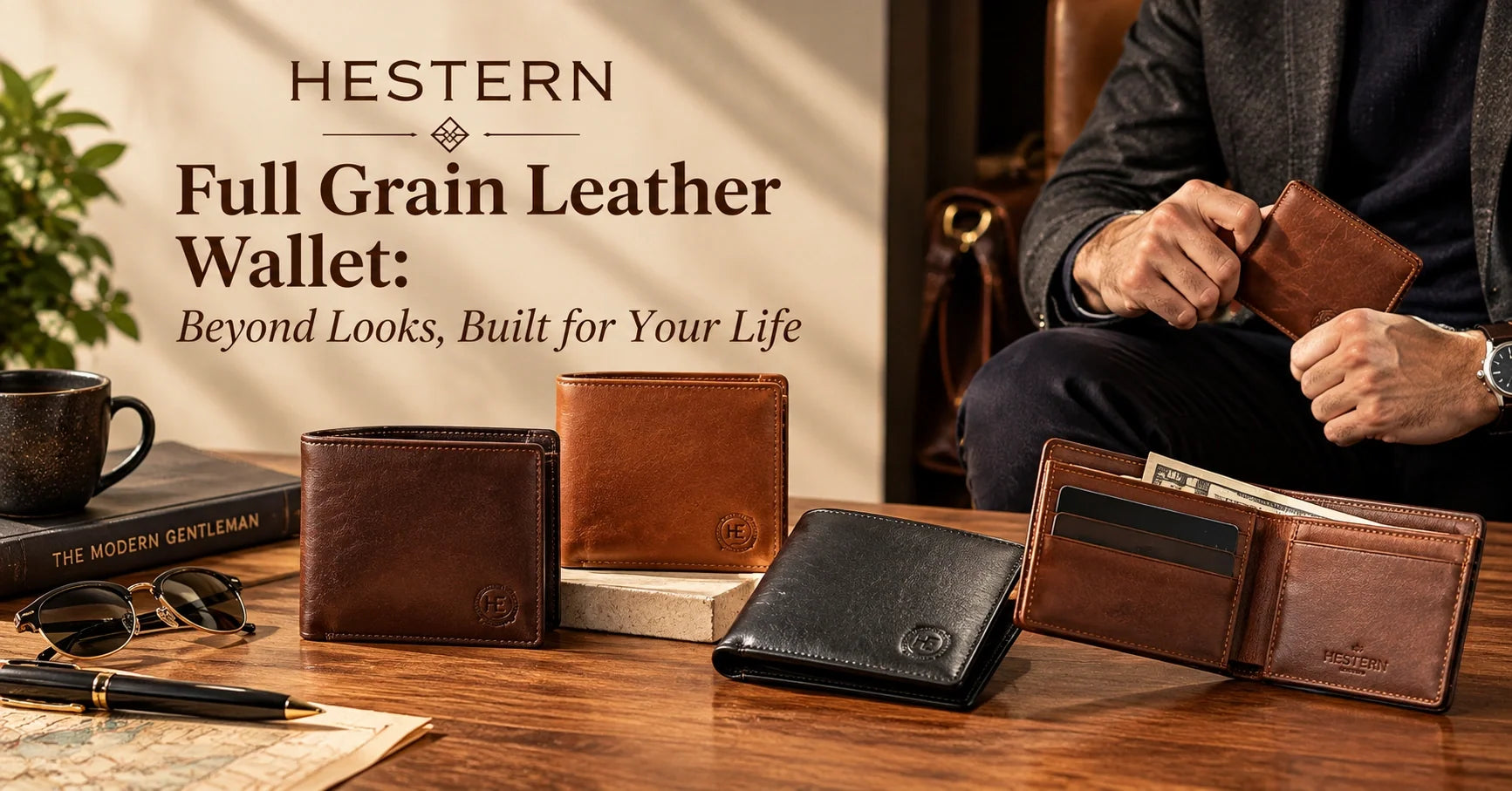
Most of us pick a wallet the way we pick a shirt. One look at the colour, a thumb across the surface, decision made in ten seconds. Then a few months later the corners curl, the card slots go loose and the whole thing bulges in the back pocket like an overstuffed samosa.
A full grain leather wallet can avoid a lot of that, but only if the shape suits the way you live. The leather is half the decision. The other half is whether you carry four cards or fourteen, and whether your phone does most of the paying or you still hand over notes at the corner shop. This guide covers both halves, so your next leather wallet for men, or the one you are buying for someone else, still feels right two years from now.
The short version: match the wallet style to what you actually carry, read the leather grade on the product page, and judge value by how long you will use it, not by the price tag alone.
What Does Full Grain Leather Mean in a Wallet?
Full grain is the outer layer of the hide with its natural surface left in place. Makers do not sand it down to hide marks, so the tight fibres near the surface stay intact. Many people find a full grain wallet feels a little firm at first, then softens and settles into the shape of their pocket. How long any wallet lasts still depends on stitching, care and how full you keep it.
Full Grain vs Top Grain vs Genuine Leather
The names sound like a ladder, and they roughly are one. Each grade has its place, though.
| Leather type | What it is | How it usually looks | What to expect |
|---|---|---|---|
| Full grain | Outer surface kept, little or no correction | Visible natural grain, small marks | Tends to soften and darken with use |
| Top grain | Outer layer lightly sanded or buffed to even it out | Smoother and more uniform | Cleaner look, patina builds more slowly |
| Genuine leather | Real leather, often from lower layers or heavily finished | Very even, sometimes embossed | Quality varies a lot by maker |
Genuine leather catches buyers out because the word sounds like a promise. It only tells you the material is real leather, not how good that leather is. Top grain is a fair middle ground. Hestern lists some wallets in top-grain buffalo leather, the Classic Leather Card Wallet for one, and others in full-grain, so read the material line on each product page instead of assuming.
Natural Marks Are Not Flaws
Real full grain leather carries the history of the animal. Small scars, faint creases and slightly different tones between two wallets of the same model are all normal. The surface also changes as you use it. Edges darken, spots your thumb touches turn glossy and the colour deepens. People call this patina, and plenty of buyers choose a full grain wallet for exactly that reason. If you want a wallet that looks identical on day one and day one thousand, a smooth, uniform finish will suit you better.
Start With Your Day, Not the Wallet
Empty your current wallet onto a table and sort the pile. Cards you use every week go in one stack. Cards you carry "just in case" go in another. Add the receipts, the folded notes and the loyalty cards from a shop you visited once. Most people find they use five or six items daily and carry fifteen.
Four Real-Life Examples
The Office Professional
Picture someone with an ID, an office access card, two bank cards and a few notes. A slim bifold works well. It slips into a trouser or blazer pocket without pulling the fabric, which matters when you sit through meetings all day.
The Everyday User
UPI handles most payments, so the wallet only needs a debit card, a credit card, a driving licence and some cash for tea and auto fares. A compact card wallet or a slim bifold covers it, and either rides easily in a jeans pocket.
The Frequent Traveller
Travel multiplies what you carry: ID proof, a forex card, boarding cash, a handful of receipts. A trifold, such as the Sentinel Vintage RFID Leather Trifold Wallet, or a roomier bifold keeps it organised. Some wallets add an RFID layer, which is a nice extra for crowded stations and airports, though it should not be the only reason you buy.
The Gift Buyer
If you are buying a leather wallet for men as a gift and do not know how the person carries, a bifold in brown or black is the safest bet. It is familiar, holds a reasonable number of cards and suits most outfits. Check the leather grade on the page, and think about whether they lean towards a plain finish or a vintage one.
Slim, Bifold or Trifold: Which Wallet Style Fits You?
| Style | Best for | Card space | Cash | Pocket feel |
|---|---|---|---|---|
| Slim or card wallet | Phone-first payers, light carriers | Smallest | A few folded notes or a clip | Thinnest |
| Bifold | Daily office and everyday use | Moderate | Notes lie flat | Balanced if not overfilled |
| Trifold | Card-heavy users and travellers | Largest | Layered and compact | Thicker, best in a back pocket |
Slim Wallets and Card Holders
A slim wallet forces honesty. You keep what you need and leave the rest at home. The Emerald Regency Compact Vintage Leather Card Wallet is listed as ultra-compact and lightweight, small enough for pockets and belt bags. The Slim Money Clip Wallet, listed in full-grain buffalo leather, suits people who carry a few notes and want quick access. The trade-off is plain: less room, so anything extra has to stay at home.

Bifold Wallets
The bifold is the default for good reason, and for most men it is the first leather wallet worth owning. Fold it once and it fits most pockets. Fill it sensibly and it stays slim. The Falcon Ridge Vintage Leather Bifold Wallet in Espresso brown is listed in full-grain vintage leather meant to develop a natural patina, which makes it a fair example of what this style offers.

Trifold Wallets
A trifold folds twice, so it holds more and sits thicker. It gives each group of cards its own spot and often includes an ID window. Choose it only if you truly carry a lot, and keep it for the back pocket. The Sentinel Vintage RFID Leather Trifold Wallet in Tan is listed in full-grain leather with an RFID security layer. The Crest Compact Leather Trifold Wallet aims for a smaller trifold shape, but its listing says textured leather, so check the material details before you decide.

Card Capacity, Cash and Pocket Comfort
How Many Card Slots Do You Need?
Count the cards from your table sort, then add one or two for later. New slots feel snug and leather stretches a little with use, so a wallet that closes with effort on day one will bulge by month three. Do not buy ten slots for five cards. Empty slots only add layers.
Cash Storage
If you use cash often, look for a full-width note compartment that keeps notes flat. A money clip suits a thin stack. Folding notes into a card wallet works for small amounts but crowds the cards.
The Pocket Comfort Test
Load the wallet with your real cards and a few notes, then sit down. If you feel it, or the trousers pull, go slimmer or switch to a front pocket. A wallet that feels perfect in the shop but awkward when you drive is the wrong wallet.
Stitching, Edges and Finish: Details That Decide Lifespan
Stitching
Seams take the strain at the corners and along the fold. Look for even, tight stitches with thread that is neatly locked at the ends. You will see the phrase handcrafted leather wallet everywhere. It is a good sign when a maker explains who made the piece and how, and Hestern describes its products as handcrafted by artisans, but still check the photos for clean stitch lines. Handwork only helps when it is done carefully.
Edges
Smooth, sealed edges feel clean and resist fraying. Raw or fuzzy edges tend to show wear first, usually as lint at the corners.
Leather Finish
Vintage or distressed finishes show variation and often look better with age. Smooth, even finishes look sharper at first but show scuffs differently. Neither is wrong. It comes down to whether you like a worn-in look or a crisp one.
Is a Full Grain Leather Wallet Worth the Money?
Not automatically. A higher price can mean better leather and better stitching, or it can mean a logo. What you want is a fair price for what is stated and shown. Here is a simple illustration. Say a basic wallet costs ₹900 and you replace it every year, while a sturdier one costs ₹1,800 and lasts three years. The first costs ₹900 a year and the second ₹600. The numbers are made up, but the logic holds: cost per year of use tells you more than the tag does.
A Quick Value Checklist
- The listing names the leather grade, not only "premium" or "pure"
- Close-up photos show the stitching and the inside layout
- Slots and note space match the pile you sorted earlier
- It still feels slim when loaded with your real items
- Care instructions are clear
Handcrafted Leather Wallet Picks From Hestern
These products show how the styles above look in a real handcrafted leather wallet for men. Details come from the product listings, and prices can change, so confirm them on the product page. Prices shown were listed on hestern.in on 29 October 2026.

Heritage Buffalo Leather Bifold Wallet - Brown Colour
Bifold in full-grain buffalo leather, described as durable with a rich texture.
₹1,849
Ironwood Leather Wallet - Brown Colour
Full-grain buffalo leather, listed for rugged durability and a developing patina.
₹1,699
Vintage Leather RFID Wallet - Brown Colour
Full-grain buffalo leather with an RFID wallet design, listed with a patina that develops over time.
₹1,699
Slim Money Clip Wallet - Rich Green
Full-grain buffalo leather in a slim, cash-first layout.
₹1,849
Classic Leather Card Wallet - Tan Colour
A card wallet listed in top-grain buffalo leather, a good fit for light carriers.
₹1,649
Crest Compact Leather Trifold Wallet - Black Colour
A compact trifold design, listed in textured leather with a soft finish.
₹1,899How to Care for a Full Grain Leather Wallet
Everyday Habits
Wipe it with a soft dry cloth. Do not stuff it past its natural shape, because constant strain on the seams wears out any wallet. Take it out of your back pocket when you drive or sit for long stretches, and keep it away from heat and direct sun.
Conditioning, Water and Break-In
Condition the leather now and then with a good leather conditioner, using very little at a time. If it gets wet, blot it and let it air dry away from heaters. A new full grain wallet may feel stiff for the first few weeks. Use it normally and it will loosen up.
Pick the Wallet You Will Actually Carry
Leather grade matters, but the best full grain leather wallet is the one that matches how you carry, feels fine in your pocket and survives your daily routine. Sort your cards, choose between slim, bifold and trifold, read the material line and look closely at the stitching. Do those four things and you will probably choose better than someone who bought on looks alone.
Frequently Asked Questions
Is a full grain leather wallet really worth the money?
It can be, if you use it daily and look after it. Full grain leather keeps the strong outer surface of the hide and tends to soften and darken with use, which many buyers like. Worth also depends on stitching, edge finish and how well the wallet fits your carry. Compare the cost per year of use, not only the price tag.
What is the difference between a full grain wallet and a genuine leather wallet?
A full grain wallet uses the outer surface of the hide with its natural texture left in place. The words genuine leather only confirm that the material is real leather. It can come from lower layers of the hide or carry a heavy surface finish. Both are leather, but the grade and look differ, so check what the product page states.
Which is better for a man: a slim, bifold or trifold wallet?
It depends on what you carry. Slim wallets suit people who pay mostly by phone and keep a few cards. Bifolds balance space and thickness for most daily users. Trifolds hold the most but sit thicker, so they suit card-heavy users and travellers. Sort your cards for a week and pick the smallest style that holds them.
How can I tell if a leather wallet is really full grain?
Start with the listing, which should name the grade. Then look at the surface. Natural grain has small irregularities, while a pattern that repeats exactly points to embossing or correction. Flexing the leather gently should give soft creases. No single test is perfect, so ask the seller if anything is unclear.
How do I take care of a full grain leather wallet so it lasts?
Wipe it with a soft dry cloth, condition it now and then with a good leather conditioner, and keep it away from heat and direct sun. Avoid stuffing it past its natural shape. If it gets wet, blot it dry and let it air dry naturally.