Cart
0
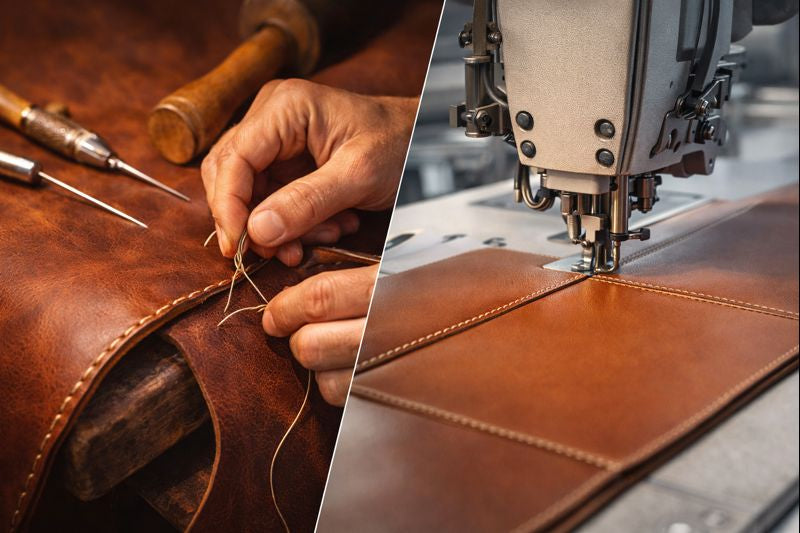
At first glance, two leather bags can look remarkably similar. Clean lines. Solid stitching. A premium finish.
Yet one lasts decades, ages beautifully, and feels personal — while the other starts cracking, sagging, or losing shape within a few years.
The difference often comes down to how the bag is made.
Understanding the real differences between handcrafted and machine-made leather bags helps you make a smarter, longer-lasting investment — especially when quality, durability, and authenticity matter.
What Does “Handcrafted” Actually Mean in Leather Bags?
A handcrafted leather bag is not simply one that involves human labor. It is a bag where critical stages of production rely on skilled hands, not automated speed.
This includes:
-
Manual hide selection and inspection
-
Hand-guided cutting to respect natural grain
-
Skilled stitching and panel alignment
-
Hand-finished edges, burnishing, and polishing
-
Individual quality inspection
Because leather is a natural material, no two hides behave exactly the same. Handcrafting allows artisans to adapt, adjust, and make judgment calls that machines simply cannot.
What Defines a Machine-Made Leather Bag?
Machine-made bags are designed for speed, scale, and uniformity.
They typically involve:
-
Pre-split or corrected leather for consistency
-
Automated cutting with minimal hide evaluation
-
High-speed stitching machines
-
Synthetic edge paints and fast adhesives
-
Assembly-line quality checks
This approach is efficient and cost-effective, but it treats leather as a standardized input, not a living material.
The Key Differences That Truly Matter
1. Leather Quality Used
Handcrafted bags almost always use full-grain or top-quality hides, where natural grain, strength, and character are preserved.
Machine-made bags often rely on:
-
Corrected grain leather
-
Heavily coated or embossed surfaces
-
Split leather with artificial finishes
These treatments improve appearance initially but reduce long-term durability.

2. Stitching Strength & Longevity
In handcrafted bags:
-
Stitch density is carefully controlled
-
Stress points are reinforced
-
Threads are chosen for longevity, not speed
Machine stitching prioritizes output volume. Over time, this can lead to:
-
Uneven tension
-
Weak seams at load points
-
Premature thread wear
Stitching is one of the first areas to fail in mass-produced bags.
3. Edge Finishing
Edges reveal craftsmanship instantly.
Hand-finished edges are:
-
Smoothed, sealed, and burnished layer by layer
-
More resistant to cracking and peeling
Machine-made edges usually rely on thick synthetic paints, which:
-
Look clean initially
-
Crack, chip, or peel with use
This single detail often determines whether a bag ages gracefully or poorly.
4. Aging & Patina
Handcrafted bags are designed to age, not just last.
With time, they develop:
-
A rich patina
-
Softer texture
-
Deeper color tones
Machine-made bags are designed to stay visually consistent, which means:
-
Coatings break instead of evolving
-
Surface wear looks like damage, not character
True leather beauty appears after years, not on day one.
5. Quality Control
In handcrafted production:
-
Every bag is inspected individually
-
Flaws are corrected, not passed along
In large-scale manufacturing:
-
Quality checks are statistical
-
Minor defects often reach the customer
This is why handcrafted bags feel intentional, while machine-made ones feel replaceable.
1. Hestern Terralux Leather Backpack
- Sleek and modern, perfect for urban professionals
- Structured enough to protect your laptop and essentials
- Lightweight design with premium stitching
- Excellent for office, daily commute, and day-long usage

2. Classic leather Card Wallet
A timeless, minimal, and elegant card wallet — perfect for everyday carry, work, or gifting.
- Compact & slim: Fits comfortably in pockets, while holding cards, ID, and essential notes.
- Premium build: Crafted from high-quality full-grain leather for durability and refined texture.
- Subtle, classic design: Clean lines and a minimalist silhouette — no flashy logos or unnecessary embellishments.

3. Executive Heritage Leather Laptop Bag
- Clean, premium, executive-style design
- Professional tan finish suitable for all office settings
- Multiple organised sections for files, chargers, diary, and accessories
- Lightweight and extremely sleek

Is Handcrafted Always Better?
Not necessarily — but for longevity, craftsmanship, and emotional value, it almost always is.
Machine-made leather bags may suit:
-
Short-term use
-
Trend-based purchases
-
Budget-driven decisions
Handcrafted leather bags are ideal when you want:
-
Long-term durability
-
A bag that improves with age
-
Fewer replacements over time
-
A product that feels personal, not generic
Why This Difference Affects Cost (and Why That’s Okay)
Handcrafted leather bags cost more because:
-
Skilled labor takes time
-
Premium hides are expensive
-
Production volumes are limited
But over years of use, a handcrafted bag often becomes cheaper per year than replacing multiple low-quality bags.
This is not luxury for show — it’s value through longevity.
How Hestern Approaches Craftsmanship
At Hestern, craftsmanship is not a label — it’s a process.
-
Only full-grain buffalo leather is used
-
Each hide is evaluated for strength and grain
-
Bags are made in small batches
-
Finishing is done by hand, not shortcuts
-
Every bag is inspected before it reaches you
This slower approach ensures that each piece carries strength, character, and permanence.
How to Identify Craftsmanship When Buying a Leather Bag
Before purchasing, check:
-
Natural grain patterns (not perfectly uniform)
-
Clean, consistent stitching at stress points
-
Smooth, sealed edges (not thick paint blobs)
-
A solid, balanced feel when carried
If a bag looks perfect but feels lifeless, it’s often machine-optimized rather than craft-driven.
Final Thought: Choose the Process, Not Just the Product
A leather bag is something you live with — not something you replace every season.
When you choose handcrafted, you’re choosing:
-
Time over speed
-
Skill over shortcuts
-
Longevity over instant perfection
And those choices show — not immediately, but beautifully — over time.
FAQs
Q1. Are handcrafted leather bags worth it?
Yes, they last longer and age better than machine-made bags.
Q2. What is the difference between handcrafted and machine-made leather bags?
Handcrafted bags focus on quality and durability; machine-made bags focus on speed and cost.
Q3. Do handcrafted leather bags last longer?
Yes, they use stronger leather and stitching, making them more durable.
Q4. Is full-grain leather better for bags?
Yes, full-grain leather is the most durable and premium option.
Q5. Are machine-made leather bags cheaper?
Yes, they are mass-produced and more affordable.