Cart
0
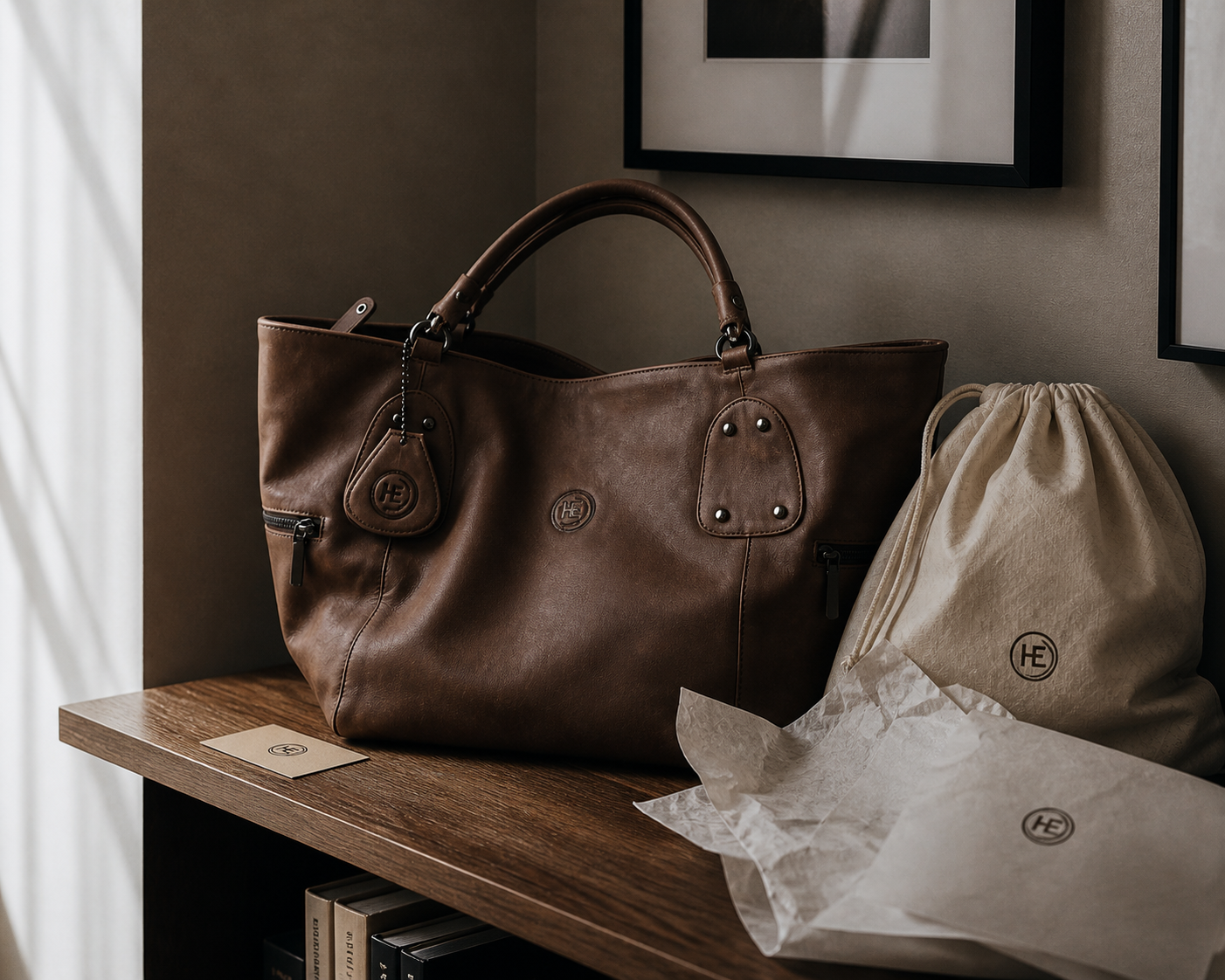
To store a leather bag properly, stuff it with acid-free tissue paper to hold its shape, condition the leather before storing (not after), keep it in a breathable cotton dust bag, and maintain a stable environment of 15–25°C with 40–60% humidity and good airflow.
Done right, proper storage doesn't just preserve a leather bag, it actively improves how it ages, deepening the patina and keeping the hide supple for decades.
You spent real money on a handcrafted leather bag. You researched it, waited for it, carried it everywhere for a few months and then life got busy and it went into a closet.
Here's the thing about good leather: it rewards attention. How you store a leather bag between uses is as much a part of proper leather bag care as anything else. Get it right, and the bag comes back out looking better than when it went in — softer, richer, more itself.
This is how you get it right.
The Real Reason Full Grain Leather Stays Beautiful for Decades
Most materials degrade with time. A full grain leather bag does the opposite, it deepens, darkens in the right places, and develops a character that only comes from years of proper care.
The key word is proper. Full grain leather hasn't been coated with synthetic finishes that do the work for you. It responds directly to its environment which means good storage keeps it supple and alive, and the fibers retain their natural moisture and flexibility for as long as you protect them.
That's actually what makes it worth owning. It's honest material. Take care of it and it takes care of you.
Why Stuffing Is the Most Skipped Step in Premium Leather Bag Care
An empty bag has no support. The panels sag. Handles fold inward. Corners compress. After a few weeks of that, those creases become part of the leather and no amount of conditioning reverses a deep fold that's had months to set.
How to stuff a leather bag for storage is simple:
- Use acid-free tissue paper, loosely crumpled. Fill to the bag's natural shape, not beyond it
- For structured bags, a soft cloth roll keeps the base flat
- Never use newspaper, the ink transfers to the lining
- For wallets, fold naturally and keep them flat with nothing stacked on top
Every full-grain bag from Hestern is built with enough internal structure to hold its form but that structure still needs support during weeks of non-use.

Leather Conditioner for Bags: Apply It Before Storage, Not After
Most guides say: condition your bag when you take it out of storage. That advice isn't wrong. It's just too late.
The better move is conditioning before you store it while the leather is still warm from regular use and the pores are slightly open. A thin, even coat applied then absorbs deeper and keeps the leather soft and nourished through the entire storage period.
A few things worth knowing about leather bag care at this stage:
- Wax-based conditioners work best for full grain leather
- Don't oversaturate, too much product prevents the leather from breathing and can permanently darken it
- Edges absorb and lose moisture faster than the surface so condition them too, not just the face
- Lighter application for softer hides; they absorb more readily
This one change — conditioning before storage — is probably the single highest-leverage habit in this entire guide.
The Right Home Environment for Storing Leather Bags
Environment does more work than most people realise. The right spot for leather bag storage keeps the hide supple; the wrong one — a sealed closet, a humid corner, a room near a heat source puts it under stress it doesn't need to be under.
For the best way to store genuine leather bags at home, the sweet spot is:
- Temperature: 15–25°C
- Humidity: 40–60% relative humidity
- Airflow: Not sealed, the space needs to breathe
- Light: Away from direct sun or UV, which fades colour and dries the surface
If you're in a humid climate, anywhere with a real monsoon season, add silica gel for leather storage on the shelf nearby. It pulls excess moisture from the air without drying out the leather directly. Swap or recharge it every few months.
The Right Way to Use a Dust Bag for Long-Lasting Leather Bags
Every premium leather bag ships with one. Most people either skip it or seal it shut which does more harm than good.
A breathable dust bag does one job well: it keeps dust and light off the leather while still letting air move. Switch to plastic and you've created a sealed microclimate that leather does not do well in.
- Loosely close the dust bag, never knot or zip it shut
- Wrap metal hardware in a layer of tissue before closing, oxidising metal transfers colour onto leather over weeks
- Hang bags with handles vertically when possible as it preserves handle shape and takes pressure off the base
- No dust bag? A clean cotton pillowcase works perfectly
Leather handbags with significant hardware need this step most, metal-on-leather contact over months leaves marks that are hard to reverse.

How to Store Handmade Leather Bags at Home Through an Entire Season
Short-term storage is forgiving. Long-term leather bag storage is where a little intention goes a long way.
For seasonal storage, three months or more, one habit matters above everything: check on it. Every six to eight weeks, take the bag out, let it breathe for a day, feel the leather.
- Stiff = needs a light conditioning pass
- Tacky or musty = too humid, needs more airflow and a fresh silica packet
- Fine = put it back
A few quiet things that affect leather in long storage: cardboard boxes absorb and release moisture unpredictably, the floor has sharper temperature swings than shelf height, and rooms that are never opened develop stale air that does the leather no favours.
For a seasonal leather duffle or a tote you rotate out for months, this level of attention adds years to how it ages. Genuinely.

Leather Bag Moisture Protection When It Actually Gets Wet
Full grain leather handles light rain and humidity well. What it needs is attention afterward. Moisture draws out the natural oils in the hide, and a quick conditioning pass once the bag is dry puts them right back.
If a bag gets wet: blot (don't rub) with a dry cloth, let it air dry at room temperature, then condition once it's completely dry.
One thing to avoid: drying with heat — hairdryer, radiator, hot car. It works against the leather's natural recovery. Room temperature and patience is always the better call.
For handcrafted leather goods with hand-finished edges, a wax-based edge conditioner applied a few times a year keeps the exposed edges in good shape through whatever the weather brings.
Good Storage and Leather Patina Preservation Go Hand in Hand
Most people think patina is purely about use. It isn't.
How a bag is stored between uses shapes the base tone that develops over time. A premium leather bag stored well — stuffed, conditioned, stable environment develops a deeper, more even patina. One that absorbs light differently, that feels lived-in in the best way.
A leather bag investment piece deserves the same attention at rest as it gets in use. The storage habits are quiet but they compound.
The Short Version
- Stuff with acid-free tissue to hold the natural shape
- Condition before storing, not just after
- Breathable dust bag only, never plastic
- Stable environment: 15–25°C, 40–60% humidity, with airflow
- Silica gel if you're in a humid climate
- Check every six to eight weeks for anything stored long term
Frequently Asked Questions
Q: Should I condition my leather bag before or after storing?
A: Before. The leather absorbs better while it's warm from use, and it stays soft through the entire storage period.
Q: Is a plastic bin okay for leather bag storage?
A: No, it traps moisture and leather doesn't do well in sealed environments. A cotton dust bag or clean pillowcase is always the better call.
Q: How do I handle leather bag storage in a humid climate?
A: Open shelf, breathable dust bag, silica gel packet nearby. Check on it every six to eight weeks.
Q: Does stuffing a leather bag actually help?
A: A lot, yes. It keeps the leather in a neutral, relaxed position so stress points don't form at folds and corners over time.
Read More
Durable Leather Bags: How to Spot One That Truly Lasts
What Makes a Leather Bag Road-Trip Friendly? A Practical Buyer's Guide
The Science of Leather Durability – Why Some Bags Last 20 Years and Others Crack in 2